


Written by R. A. Stewart
Your risk profile is a term you may hear from time to time from financial commentators. This is the amount of risk you are able to take when investing your money. There are several factors which determine what your risk profile is and the same profile is not applicable to everyone who invests because everyone’s personal circumstances are different.
It should also be pointed out that your financial portfolio could have a different risk-factor attached to them.
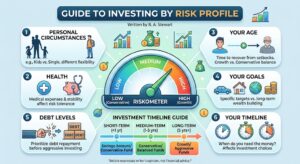
Here are the main factors which determine your risk-factor
- Your Personal Circumstances
If you have young kids then there is little room for risk in your portfolio apart from your retirement funds. Someone who is young and single can take more risks without being reckless.
- Your Health
This has a bearing on your plans if your health is so compromised that there are medical bills to think about. If this is the case then you might want to be a little conservative with your investing because the last thing you need is when it comes to cashing in on your investment only to find that you have less money than you thought due to a market meltdown.
- Your Age
At a young age you have more room for financial mistakes. This is because time is your friend. You have more time to recover from financial setbacks. This all means that investing in growth funds is a good option for you as far as your retirement fund is concerned. If you are saving for a vehicle and you have given yourself a 1-2 year timeline for this then investing a little more conservatively is the way to go. The last thing you want to happen is for the markets to drop just when you need the money for your car and for your savings to be less than you expected.
- Your Goals
Your goals or rather what you expect to do with your savings whether it be for a car, house deposit, overseas trip, or to build up your financial portfolio is a factor in determining which is the best option for investing your money. If you are investing to increase your wealth and have no set time as to when you need the money then you have more room for risk. If you are saving for something in particular then you have less room for risk.
- Your Debt levels
“A debtor is a slave to the lender” and if you have debt your first responsibility is to pay it off before you even consider saving for anything. Keep in mind that if you have debt then you have no discretionary spending money until that debt is paid.
- Your Timeline
The question should always be asked, “How will this affect my lifestyle if there is a market meltdown?”
This means that you should invest according to when you need the money. Here is a quick guide:
Timeline Time
Short-term: 12 months or less Savings account/conservative fund
Medium-term:1-5 years Conservative/Medium funds
Long-term 5 years+ Growth funds
About this article
This article is of the opinion of the writer and is not financial advice. You may use this article as content for your blog/website or ebook.
Read my other articles on www.robertastewart.com
Quick Travel Tip for your next big trip: 💡 Order your Wise card 4-6 weeks before you leave. This gives you time to:
- Fund your account.
- Get familiar with the app (seriously, it’s so easy).
- Lock in some currencies when the rate is favorable. Don’t wait until the last minute! Future-you will thank you. 🙏 What’s the first thing you load up? (Mine is usually Euros!)