

Wise Travel Card V Debit Card 

Written by R. A. Stewart

I own a Wise Travel card and a debit card. They are both convenient to have when I am travelling abroad but serve different purposes. There are some basic security rules one must follow when using these cards. Here they are:

  1. Don’t sign up with these cards with an email address which you use for cryptocurrency, dating sites, and whatever and when you are given the option of signing in to AI with a Google account don’t use an email address that you use to sign in to Wise or your debit card.
  2. Don’t click on any link you receive in your email; it could be a scammer for all you know trying to hack into your account.
  3. Don’t use an easily identifiable password such as your pet’s name. Someone could get this info about you by looking at your social media stuff.
  4. Don’t use either of these cards for saving for an overseas trip, a car, or whatever it is you are saving for. There are better options for saving money such as an ordinary bank account or in shares.
  5. Have other options for money if you should lose one card so that you won’t be caught out on holiday. Familiarise yourself with the process for dealing with a lost or stolen card.

A Wise travel card and debit card are convenient ways to pay but in different ways. Here are the differences:

Travel: Wise Travel Card 

Using a Wise travel card when you are overseas will save you a lot of money in bank fees. If you are using your bank’s debit card for your day to day spending while you are overseas then you will be shocked by the amount of money that has been spent on bank fees.

Accommodation expenses: Debit card

A debit card is handy for paying for your accommodation online which is what I do but if you are paying at the counter then both a wise card and a debit card will do the job. Bank fees on your debit card will be higher though. Be aware that some accommodation providers require you to give your debit card details to them as security.

Grocery Shopping: Wise card

A wise card is better for grocery shopping when you are overseas, if you used your bank’s debit card to pay for your day to day expenses then the bank fees will quickly add up.

Saving money: Neither a wise travel card  or an ordinary debit card are suitable for saving money due to security issues, but there is an exception to this rule and that is if you were putting money aside for your holiday spending money. I just top up my wise card months prior to travel and while I am on my travels.

Internet shopping: Debit card

I use a debit card for my internet shopping such as with ebay, trademe, and the like, but you still need to be careful with which sites you give your bank details to.

Bus/train transport: Wise card

I use a wise card for domestic travel whether it be the local buses in the cities like Edinburgh, Stirling, and Aberdeen or paying for train travel. Using a debit card for overseas travel is more expensive. 

About this article

This article is of the writer’s opinion and does not represent financial advice and may not be applicable to your personal circumstances  therefore discretion is advised. You may use this article as content for your blog or ebook.

Read my other articles on www.robertastewart.com


JOIN WISE HERE

Tired of seeing your bank charge you $5-10 every time you withdraw cash abroad PLUS that hidden foreign transaction fee? 🤯 That’s money that should be buying you a gelato, a beer, or a souvenir. Wise gets you the real mid-market exchange rate with only tiny, transparent conversion fees from 0.42%. Stop funding your bank’s next vacation. Fund yours. 👉 Link in bio to get your Wise card! 

JOIN WISE HERE

#TravelHacks #WiseCard #NoHiddenFees


Stop Overspending: Why Separate Accounts Are Your Best Savings Hack

Written by R. A. Stewart

These days people have bank accounts for different kinds of purposes depending on what the money is being used for. Having your money in separate accounts helps avoid the temptation to spend. Here are some of the most common types of bank accounts people have.

  1. Personal Savings Account

This is the account most people get their pay credited to. It is a spending account for everyday living such as groceries, car running costs, etc. Most people have their fixed bills such as newspaper subscriptions, power bills, and rent directly debited from this account.

  1. Rainy Day Account

This is for unexpected expenses such as car break downs, appliance repairs, school expenses, etc.

  1. Retirement Account

It is essential to have some kind of retirement account. New Zealand’s retirement scheme is called Kiwisaver. It takes vision to make provision for your later years. It is also the responsible and mature thing to do. If there is one thing which your future you will thank you for it is that in your present you have made consistent contributions to your retirement account.

  1. Rent or Rates account

This needs to be kept separate from an account you use for your everyday transactions because what you do not need is to be short of money when it comes to paying your rates or rent.

  1. Insurance bill account

Paying insurance is not cheap, whether it is house or contents insurance, or vehicle insurance and keeping a separate account for this will give you a peace of mind when it comes to paying it.

  1. Travel Spending Money account

This account is for your holiday spending money; this is discretionary spending money. You should not have a credit card for any reason, especially for travel expenses. If you cannot even save your holiday spending money then stay home.

  1. Travel Airfares account

The same rules as your travel spending money account.

  1. Investment accounts

Investing your money grows your wealth. In order to grow your wealth for your future you must invest in several places. Investing not only grows your wealth, it also grows your financial literacy.

  1. Debit card for online transactions

Having a debit card for purchasing stuff online is convenient. A debit card is not for saving whether short-term or long-term. It can be easy to fall victim to a bank scam with a debit card. All it takes is for you to lose your card so only have what you need in this account.

Power Saving Hack: If you have a freezer and there is a lot of empty space in it then get some empty soft drink bottles and fill them with water and put them in the freezer. A part empty freezer uses more power than a full one.

About this Article

This article is of the opinion of the writer and is not financial advice. It may not be applicable to your personal circumstances therefore discretion is advised. You may use this article as content for your blog/website or ebook.

Read my other articles on www.robertastewart.com

Explore Freely, Spend Wisely: The Ultimate Travel Companion


For the ultimate freedom to explore these incredible routes, get a Wise Travel Card. One card holds multiple currencies, letting you pay effortlessly in NZD for fuel, snacks, and accommodation. It automatically converts your money at the mid-market rate, saving you from costly bank fees. Top up and manage your funds instantly via the app, making it the smart, secure, and simple way to travel. Spend like a local and focus on the scenery, not the small print. Get yours and travel with ease.

https://wise.com/invite/dic/roberts10486

Fixed Term Versus Dividends

Written by R. A. Stewart

Two excellent wealth building vehicles are fixed term deposits and dividends paying shares. Both aim to put your capital at work but they operate differently as far as risk, return, and tax treatment goes.

Fixed-term interest

Your money is invested for a predetermined period of time, this could be for months or years for a guaranteed interest rate.

Investors in fixed-interest deposits know the return they are receiving on their investment.

Dividends

Dividends are made by the companies to their shareholders; they represent dividends of the company’s pot-tax profit.

Investors in companies on the share market do not know the return they are receiving. It is the directors who decide how much to distribute to shareholders.

Investors in the share market aim to receive a regular income through  dividends and capital growth of their shares. (share price appreciation)

Key Differences

Fixed-term interest

  1. Capital Preservation and Steady income.
  2. Low capital risk
  3. Fixed and guaranteed income
  4. May lag inflation depending on the interest rate.
  5. Money not available until maturity

Dividends

  1. Income growth and capital appreciation
  2. Moderate to high capital risk due to market volatility.
  3. Variable income depending on how well the company is doing.
  4. Shares have historically outpaced inflation.
  5. High liquidity. Shares can be sold when markets are open.

Which is more risky?

The main risk with fixed term interest is inflation risk where the purchasing power of your money decreases with rising costs. The other factor to consider is that the market rate of interest may increase during the time you are locked into a lower interest rate.

The main advantage with shares is that it can be quickly turned into cash when needed. The flip side to this is that the markets may be down just when you need that money but thanks to managed funds and micro investing platforms it is possible to invest in such a way as to minimize the risk of being on the losing side of a downturn in the markets.

It is a matter of investing according to your timeline.

If you need the money within twelve months or the money needs to be on call then a personal bank account paying next to no interest may be your best option. However, fixed term interest may be your best option, if you have $5,000 to invest and need that money for say, a car in six months to a year. Your other option if you are in that position is to invest in a conservative fund. Your money will be invested in shares but in less risky companies.

What about the medium to long-term?

Shares have traditionally outperformed returns on fixed-term interest in the long run. 

If your timeline is long-term then past history indicates that you are better off investing in shares.

It is important to stay calm when the markets are down and your retirement fund balance has dropped. Just continue to live your life, working and making contributions to your retirement fund and let the final balance take care of itself.

About this article

This article is not financial advice and may not be applicable to your personal circumstances therefore discretion is advised. You may use this article as content for your blog or ebook.

Read my other articles on www.robertastewart.com


For the ultimate freedom to explore these incredible routes, get a Wise Travel Card. One card holds multiple currencies, letting you pay effortlessly in NZD for fuel, snacks, and accommodation. It automatically converts your money at the mid-market rate, saving you from costly bank fees. Top up and manage your funds instantly via the app, making it the smart, secure, and simple way to travel. Spend like a local and focus on the scenery, not the small print. Get yours and travel with ease.

https://wise.com/invite/dic/roberts10486

Get Rich Quick Gurus: Don’t be misle

Written by R. A. Stewart

”If it is too good to be true, it almost certainly is.”-anonymous

Have you ever seen those adverts on youtube from Get rich Gurus who claim to have made thousands of dollars per month and promise that you can by following their formula. Strange, that we never hear from those viewers who the videos are aimed at.

How do these people make their money?

The answer:

They have a call to action in the description of their video. Many of these call to actions are affiliate programs where the person behind the youtube channel gets a commission if you sign up with the website.

Having a degree of common sense and discernment will go a long way when you are confronted with people who are making these outrageous claims.

Here are some things to keep in mind:

1 You do not know what another person has done to get where they are nor do you know how much money they have outlayed to get where they are.

2 You do not know how hard another person has worked to get where they are. 

3 For everyone who has achieved something out of the ordinary there are thousands who tried the same thing and achieved nothing but a lighter bank account.

Re Flags to keep an eye out for.

They will use images of villas, stacks of cash and super cars to create what is known as “Fear of Missing out, FOMO”.

In the video they will make it seem so simple that anyone can do it by using the phrase “Simple step by step system.”

How do these people make their money?

Their income is made through the YouTube adsense program, from selling courses on how to make money, affiliate programs, and from promoting affiliate programs.

An aggressive call to action is a sure red flag. “Do this before its too late” is a phrase which is used to create a desire in the view to make an impulsive decision.

It pays to have a healthy level of skepticism when watching these videos. 

Turning to your own situation, ask yourself “How does this business fit in with my lifestyle?”

Ask yourself the following questions:

  1. How much time do I need to devote to this business and do I have the time to spend on this?”
  2. How much money is required to make this business idea work?
  3. “How will this affect my lifestyle?”
  4. Do I have the desire to persevere with this idea?

Don’t give up your day job!

One YouTube marketer puts this disclaimer on his videos, “Most people make nothing.”

That basically sums it all up. There is certainly nothing wrong with having a crack but being sensible about it will save you a pretty penny.

About this article

You may use this article as content for your blog or website. 

Read my other articles on www.robertastewart.com

Mistakes made by investors


Written by R. A. Stewart

Everyone makes mistakes, it is a part of learning. Those who claim to have never made any mistakes are living in self-deception. As far as money and investing is concerned, learning how to invest according to your goals and personal circumstances requires experience and that will be accompanied by mistakes along the way. As they say, “Experience is your best teacher.”

Here are some of the most common mistakes made by investors.

  1. Investing too conservatively

Investing too conservatively will leave you short-changed in the long run if there are decades between you and retirement. Long-term investors who are too conservative are leaving thousands of dollars on the table. This does not mean that you should be reckless and invest your life savings in something risky but invest for growth.

  1. Investing in the wrong fund.

If you have a retirement fund or mutual funds then investing according to your goals is important. If you have a rainy day account this should be invested in something safe such as with a high street bank because the money is available as needed and the last thing you want is to invest your rainy day fund in something volatile such as shares and  just when you need the money your balance has gone down and you will have less money in your account than you thought you had.


  1. Not diversifying

Placing all of your eggs in one basket is just asking for trouble. You don’t know what is going to happen in the future. Investing your money in several places will cushion you from the effects of a downturn in the economy because not all industries are affected in the same way. 

  1. Unwillingness to get financially educated

Ignorance can be very costly. If you are not even willing to learn how to manage your own money and investing then you have only yourself to blame if you end up in need. There is only one person who can change your situation and that is the person you see in the mirror.

  1. Lack of Planning

Not knowing where you are going will lead you to nowhere. Having goals for you and your finances gives your work and your life a purpose. It gives meaning to everything you do. It is the “Why” to everything you do.

Everyone has choices but these choices have consequences and it is up to you to make choices which are beneficial to you and your family if you have one. Taking responsibility for your choices and mistakes shows that you are a mature person. Immature people blame others for their mistakes and are quick to find a scapegoat for their misfortune.

About this article

This article is of the opinion and experience of the writer and is not financial advice.

You may use this article as content for your blog or ebook.

Read my other articles on www.robertastewart.com

Explore Freely, Spend Wisely: The Ultimate Travel Companion


For the ultimate freedom to explore these incredible routes, get a Wise Travel Card. One card holds multiple currencies, letting you pay effortlessly in NZD for fuel, snacks, and accommodation. It automatically converts your money at the mid-market rate, saving you from costly bank fees. Top up and manage your funds instantly via the app, making it the smart, secure, and simple way to travel. Spend like a local and focus on the scenery, not the small print. Get yours and travel with ease.

https://wise.com/invite/dic/roberts10486


Investment Strategy

Investment Strategy

Written by R. A. Stewart

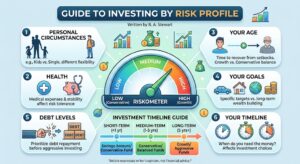
Because investing is not a sure thing in most cases, it is much like a game – you don’t know the outcome until the game has been played and a winner has been declared. Anytime you play almost any type of game, you have a strategy. Investing isn’t any different – you need an investment strategy which is based on factors such as your age, your goals, and your personal circumstances.

An investment strategy is basically a plan for investing your money in various types of investments that will help you meet your financial goals in a specific amount of time. Each type of investment contains individual investments that you must choose from. A clothing store sells clothes – but those clothes consist of shirts, pants, dresses, skirts, undergarments, etc. The stock market is a type of investment, but it contains different types of stocks, which all contain different companies that you can invest in. 

Your financial plan must be one which fits in with your personal circumstances and not something which you feel you should do just because others are doing it. Making choices which will enable you to live within your means is at the heart of money management, it is not the size of your pay packet which counts it is what you do with it which determines how much you have by the following pay day.

If you haven’t done your research, it can quickly become very confusing – simply because there are so many different types of investments and individual investments to choose from. This is where your strategy, combined with your risk tolerance and investment style all come into play. There are plenty of books available on finance and investing. Reading these books will increase your financial literacy with the result that you make better choices in the future.

If you are new to investments, work closely with a financial planner before making any investments. They will help you develop an investment strategy that will not only fall within the bounds of your risk tolerance and your investment style, but will also help you achieve your financial goals. 

Never invest money without having a goal and a strategy for reaching that goal! This is essential. Nobody hands their money over to anyone without knowing what that money is being used for and when they will get it back! If you don’t have a goal, a plan, or a strategy, that is essentially what you are doing! Always start with a goal and a strategy for reaching that goal!

Your goals are the factors which determine where you should invest your money. If the money is for your retirement then growth funds may be the answer to where to invest but this all depends on how long to go before you retire and when you are likely to need that money.

Never beat yourself up for making the odd mistake and never let it deter you from making future investments. Learn from your mistakes and learn from them. In this way you will become a better investor.

ABOUT THIS ARTICLE

This article is for information purposes only and is not financial advice, it is of the opinion of the writer and may not be applicable to your personal circumstances, therefore discretion is advised. 

Read my other articles on www.robertastewart.com

Working in your chosen field

You may not have the talent or inclination to be an international sportsperson but you can be an asset in your chosen field and that does not mean that you have to be something out of the ordinary to become a valued member of society. A person who works at an entry level job can do so with such a good attitude that their diligence will not go unnoticed by their employers.

You may not particularly like your job and have any control over what happens at work but your attitude is something you can control. An employer with a bad attitude will take that bad attitude with them wherever they go. 

If you enjoyed this article then this ebook may interest you:

How to Enjoy Your Job

Investing: Experience is the best teacher

Investing: Experience is the best teacher

Written by R. A. Stewart

“He who never made a mistake never made anything”-Jim Addison, Scottish evangelist

In investing as in anything else in life there is no substitute for experience. It is all very well learning about how to become a good investor but it is only when you start investing your own money in the markets when you learn how to become a good investor.

Some investors play the markets on paper and are excited that their paper portfolio is showing a profit on paper so start investing real money and soon find that the markets don’t just rise but fall as well.

It soon dawns on them that what goes up also goes down. 

It is important to get used to the volatility in the markets and ride out the lows. If you are clear on why you are investing then the highs and lows are not a problem.

There are two ways to learn:

  1. Your own mistakes
  2. The mistakes of others

You can reduce your own mistakes by getting yourself financially literate. This comes from reading books on investing and finance and from learning from the mistakes of others.

There is nothing quite like making your own decisions as to where you are going to invest your money. The satisfaction to be had when your judgment is spot on, but you will make mistakes along the way as we all do.

Don’t beat yourself up if some company you had shares in fell by the wayside. Learn from your mistakes and move on. It is important to not let the market volatility deter you from investing.

If you are new to the world of investing then think of it this way. If you are learning to drive a motor vehicle, learning how to use a computer, or learning the ropes in a new job, you will make mistakes but as you gain more experience your level of competence will grow and your mistakes will be less and less.

Learn all you can about the ins and outs of the market and apply it to your own personal circumstances. The older investors have been through a number of roller coaster rides with the share market over the years and are worth listening to for their opinion, but it pays to have the discernment to know who is worth listening to and who not to take advice from.

A few people were scared from the 1987 share market crash, called “Black Monday” that they never invested in the share market since. Such people have missed out on the gains since 1987 and the experience would have made them good investors.

Good judgement comes from past bad experiences; it is all a result of the lessons taken from previous experiences. 

Investing experience will give you the ability to make better choices in the future and this helps to increase your future wealth. 

Never use the excuse, “I don’t have any experience in this or that”, we all started from somewhere, and today it is possible to start investing in the markets on a shoe-string with all of these investing apps.

All the best

About this article

The information here is the opinion and experience of the writer and is not financial advice, therefore discretion is advised.

Read my other articles on www.robertastewart.com

 Tired of seeing your bank charge you $5-10 every time you withdraw cash abroad PLUS that hidden foreign transaction fee? 🤯 That’s money that should be buying you a gelato, a beer, or a souvenir. Wise gets you the real mid-market exchange rate with only tiny, transparent conversion fees from 0.42%. Stop funding your bank’s next vacation. Fund yours. 

JOIN WISE HERE

The Value of a Rainy Day Fund

The Value of a Rainy Day Fund

Written by R. A. Stewart

Having a rainy day fund will enable you to pay for unexpected expenses when they arise. This could be for medical expenses, dental expenses, car breakdown, or anything else which may crop up from time to time.

A rainy day fund is not something you use to pay for discretionary spending items. Gym membership fees, a weekend away, or a day at the races are not things you would dip into your rainy day fund for.

When setting up this account you need to set guidelines as to what can come out of this account and what is a no no.

If you are in debt then should you have a rainy day account?

The answer to this is yes, but you MUST pay off your debt first before start depositing money into your rainy day account because the savings on interest will put you into a better financial position.

It is not sensible to have money in an account which pays next to no interest when you are paying high interest on loans.

If there is one bad habit which can be a hindrance to financial freedom it is the habit of borrowing money for stuff which should only be bought with discretionary spending money.

I hasten to point out that if you have debt of any kind then you do not have any discretionary spending money until that debt is paid off.

Getting into the habit of living more modestly means readjusting your lifestyle to fit in with your monetary goals. There are things which people spend their money on which are really choices. They have the choice to spend it on this and that or do without it. 

A bad money manager fritters away all of their discretionary spending money so that by the time the next payday comes around they are broke.

Having a raining day account will provide a cushion again unexpected events which can cause finance stress.

Where to keep it: Keep this money in a separate, easily accessible bank account — ideally a high-yield savings account. It shouldn’t be hard to reach when you need it, but keeping it isolated from your day-to-day checking account prevents you from accidentally spending it on regular expenses.

The benefits of a raining day account are:

  1. It protects you from high interest debt. If you have a $1,000 bill suddenly crops up then your only option may be to borrow that money at high interest rates.
  2. It gives you peace of mind. Knowing that you have money readily available to pay for some unexpected expense gives you some breathing space.
  3. It prevents you from selling investments at the wrong time. If you have investments in growth or balanced funds then you may be forced to sell them just when the markets are down. Having a rainy day account will insure that this does not happen.
  4. It buys you time and choices. If you suddenly suffer a job loss, a rainy day account will buy you time to decide on your next move instead of just making a random choice out of desperation.

About this article

This article is of the opinion of the writer and may not be applicable to your personal circumstances, therefore discretion is advised. This is not financial advice but the opinion of the writer.

Read my other articles on www.robertastewart.com

Escape the rat race on your own terms.

Financial insecurity shouldn’t hold you back from living fully. Discover practical tools, fresh mindsets, and actionable strategies to retire joyfully—without traditional wealth constraints.

📖 Download your copy of Retire Without Money now!

The Magic Power of Compounding


Written by R. A. Stewart

If you have any kind of financial knowledge you will know that the process of investing your money for years, sometimes decades and leaving your interest or dividends accumulate so that you end up earning interest off your interest is known as compounding.

Your investment starts to snowball once you have built up a decent portfolio. Using the process of compounding will enable you to achieve your goals faster.

Compounding also helps you to beat inflation which is a thorn in the side of those who are trying to get ahead in life. 

Investors who choose to have their interest or dividends paid into their bank account rather than have them added to their investment will find that their original investment will lose it’s purchasing power thanks to inflation. 

Your investing timeline is a big factor and the purpose of your investment.

If you are retired then you may prefer to have dividends paid into your bank account to help pay the bills and many do just that. The young ones usually let the income from their investments accumulate. This is common in retirement and mutual funds.

When you are saving for something then consider whether they are short-term, medium-term, or long-term goals. This matters because choosing the wrong type of investment for your timeline can affect how much you will end up with when it comes the time to cash in your investment.

For example it is not appropriate to invest your emergency fund in a growth fund due to it’s volatile nature because what is liable to happen is that just when you need the money the markets are down and there is less money available in your emergency fund than you thought there was.

At the other extreme, it is foolish to just leave your retirement fund in an ordinary savings account where you are paid minimal interest because inflation will erode the spending power of your money. 

Here is a break-down of the timelines of Short-term, medium-term, and long-term goals.

Short-term goals are within 12 months.

Medium-term goals are 1-5 years.

Long-term goals are over 5 years.

Getting into the habit of saving and investing will put you into a good position to withstand the financial shocks which life throws at you. This could be illness, job loss, family emergency, car breakdown, or anything else.

It takes vision to make some kind of provision for your future because you are preparing yourself for an event which may or may not happen. 

Then there are events which most people planned for such as buying a new car, further education,  saving for a house deposit, marriage, family, overseas trip, and retirement. People who have common-sense will make provision for events in their life which they expect to happen.

Investing your money for compound interest will help you to achieve your money goals sooner rather than having your interest or dividends paid to your bank account to spend. But it all depends on your personal circumstances.

About this article

This article is not financial advice and may not be applicable to your personal circumstances, therefore discretion is advised.

You may use this article as content for your blog/website or ebook.

Read my other articles on www.robertastewart.com


 Tired of seeing your bank charge you $5-10 every time you withdraw cash abroad PLUS that hidden foreign transaction fee? 🤯 That’s money that should be buying you a gelato, a beer, or a souvenir. Wise gets you the real mid-market exchange rate with only tiny, transparent conversion fees from 0.42%. Stop funding your bank’s next vacation. Fund yours. 

JOIN WISE HERE

The SpaceX Bandwagon should be treated with caution

The SpaceX Bandwagon should be treated with caution

Written by R. A. Stewart

Elon Musk has sold or is going to sell 4% of SpaceX.

The first thing I have learned is that when a company gets a lot of publicity and there are shares in the company the Fear of Missing Out or what it is often called FOMO takes hold of a lot of investors who want a piece of the action.

In the past FOMO euphoria has caused the share price of some companies which were just floated to be inflated and then they did not stand the test of time. The result being that investors were left with burned fingers.

That is not to say that SpaceX will suffer the same fate. 

But…

There are some negatives which mean that investing in this SpaceX can be classed as speculating rather than investing.

The main one being that a company which is hyped up by the media is usually over valued as has already been talked out. Then there is the fact that the company has not made a profit but is expected to.

Most people who are jumping on this bandwagon turn a blind eye to the possible pitfalls and risks of investing in such companies.despite all of the negatives. They get comfort from the fact that others are also investing in this company.

Investors need to take stocks and think of the past when others have jumped on bandwagons and got their fingers burned.

The 1987 share market crash, known as “Black Monday” an example of how the “Follow the herd” mentality led to paper fortunes being lost. Some investors borrowed heavily to purchase shares and as the company shares rose they were able to borrow more money using the inflated value of their shares as collateral. It all ended in disaster as the value of the shares were only a fraction of the loans taken out to purchase the shares.

Something is only worth what others are prepared to pay for. 

Many of those companies which fell during the 87 crash were basically paper shuffling companies which were not producing anything tangible. All of those investors who jumped on the bandwagon were responsible for creating an inflated value for these companies.

Then there is the Global Financial Crisis when lots of people lost their life savings because they invested in finance companies which were offering high interest rates. Some financial commentators warned that the high interest rates do not reflect the risk which investors are taking on.

Many of these companies were advertising on national television and used well-known advertising to promote these companies.

SpaceX may not fall into the same category of those companies which failed during the 87 crash or the GFC but if a herd of investors are buying shares in the company there’s little room for capital gain.

Always remember that if there is an opportunity for capital gain there is also a chance for a capital loss.

This all does not mean that SpaceX is a bad bet but rather where it all fits into your financial plan. If you just want an interest, albeit a small one, then go for it. You may just end up with a winner. Just follow the basic rules of investing such as “don’t plunge all of your life savings into one company.”

About this article

The contents of this article is of the opinion of the writer and may not be applicable to your personal circumstances therefore discretion should be advised. R. A. Stewart is not a financial advisor and the information and opinions here should not be taken as financial advice.

Read my other articles on www.robertastewart.com


The Benefits of Having a Travel Card

A dedicated travel card makes trips smoother and more secure. Unlike regular debit cards, travel cards often offer competitive exchange rates, low foreign transaction fees, and multi-currency support—saving you money on conversions.

If lost or stolen, travel cards can be frozen instantly via an app, protecting your funds without affecting your main bank account. Many also provide emergency cash replacement and 24/7 support.

Preloaded with a set budget, travel cards help control spending and avoid overspending. Some even offer rewards or insurance perks. For worry-free travel, a travel card is a smart financial companion.

Join Wise Here