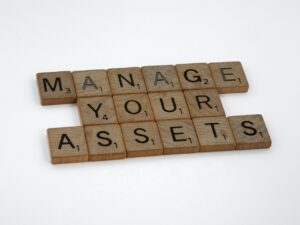


Asset Rich but Cash Poor


Written by R. A. Stewart

Asset rich but cash poor is when one has substantial non-cash assets but has little money to spend. It is not uncommon for someone to have a home worth several hundred thousand dollars but are struggling to pay their weekly household expenses.

It is not only real estate that can be considered non-cash assets; a retirement account and a business fit into this category because you do not have easy access to wealth which is tied up in these things.

Having an asset which can be easily turned back into cash is important. 

I heard recently that the over 60s considered their home as their biggest asset. This is an age when retirees think about travelling. Personally, I don’t see the point in the elderly spending their money on their house only to just leave the house to someone else when they pass on. 

The elderly have requirements that can turn out to be costly in later life. Therefore, having liquid assets which can be easily turned back into cash is important.

Health issues can strike at any time and without warning, therefore having some kind of financial cushion can soften the blow.

Solutions to being asset rich but Cash poor

  1. Downsizing

Living in a smaller less expensive house can release capital which can then be invested in liquid assets. Diversify your wealth so that there is a balance between non-cash and cash assets. Living a more modest lifestyle will enable one to live more comfortably. 

  1. Equity Release/reverse mortgage

This is when you borrow money using the capital in your home. The money is paid back along with the interest when you die. This option is not suitable for those who want to leave their property to the young ones in their will.

  1. Live within your means

Set a budget and stick with it. Get into the habit of saving and investing. Don’t fritter your money away without any thought for the future.

  1. Invest regularly

Don’t just invest into your retirement fund and leave it at that. Get into the habit of investing some of your discretionary spending money. These days online investing platforms have made it possible to drip-feed money into the share market. It is just a matter of being a consistent saver.

Your Personal Circumstances

Everyone’s financial circumstances are different, therefore any adjustments you make to your asset base must be in alignment with your own goals and financial situation. You may have most of your assets in real estate and still manage to live comfortably. If that is the case then you are doing well.

The thing to consider is that many people like to use their home as part of their retirement fund. By downsizing in retirement, they are able to start travelling abroad.

It is all about living in balance and clearly setting out your priorities. Any decision you make regarding your own asset allocation must be your own and no one else’s. 

Owning assets which can be easily turned back into cash when needed is convenient when the time comes. I remember a retired chap told me that he bought a new car using money he had in his kiwisaver account. This was just prior to when the pandemic of 2020 started. The markets had started to fall after he had bought the car. I told him that no wonder he is smiling because he would have had less money in his kiwisaver if he waited another month to buy that car. This fellow also told me months earlier that his wife had a knee operation costing 30k. I never thought to ask him how he paid for that. 

Health issues will creep up on you and having the means to pay for it all is a problem for a lot of people. Setting up your finances smartly can set you up for the latter part of your life.

About this article

The content of this article is of the opinion of the writer and may not be applicable to your personal circumstances, therefore, discretion is advised.

You may use this article as content for your blog/website, or ebook.

Read my other articles on www.robertastewart.com



The difference between assets and liabilities

ABOUT THIS ARTICLE

Knowing the difference between real assets and real liabilities and then setting your financial goals accordingly can be the difference between getting yourself financially sorted or the poorhouse. It underlines the value of financial literacy in helping achieve your goals.

The difference between assets and liabilities

Written by R. A. Stewart

An asset is something which pays you money while an asset is something that costs you money.

So let’s look at some examples.

Is property an asset or a liability?

Some people may say it is an asset because it is something you own, however, if you owe money on that property and are not getting a return on it then it is a liability because it is costing you money.

Is it an asset if you are receiving rent from that property?

Only if you are making a profit.

Some people would not agree saying, “The property is increasing in value over time.”

Lets not forget there are rates to pay plus maintenance costs and insurance to pay on that property so it could be costing you money in the long term but you will have to sit down and do your homework. 

Other investment times are less complicated such as the sharemarket so lets look at other investment types which are assets. 

Assets

Your retirement fund

Mutual Funds, also known as managed funds

Other investments

Business or farm

Learn to invest your money in items that can be quickly converted back to cash; some investments do not allow you to quickly turn the asset back into cash without jumping through several hoops.

Liabilities

Any item which has money owed on it and this is your form of transport, however there are circumstances where it may be an asset such as if the vehicle is used as a taxi, which therefore makes it an asset as it is producing an income. Such costs and the money owing on the vehicle can be tax deductible. The same applies to any vehicle used in a business.

Even though a vehicle used for work and business purposes may be classed as an asset, the money owed on that vehicle is a liability and will go into the accounts as such.

The reason why so many people are in such a poor financial state is that they borrow for stuff instead of saving for it and therefore pay more for that item in the form of interest payments.

A pet can be classed as a liability if it is costing you an arm and a leg to keep. Think of a dog for example; I read somewhere that it costs $20,000 to keep a dog during its lifetime. That is not just the food but vet bills and the like. A dog can be classed as a liability.

Do a stock take

Before you know where your money is going you need to do a stock take of all your spending.Your number one priority has to be the elimination of debt and plug up those leaks in your spending that is costing you money. In this way you will know where to make savings and redirect that money elsewhere.

Your task needs to be to reduce liabilities which means reducing debt then once you have savings use it to build your wealth. This involves setting goals which will increase your wealth and not send you to the poorhouse.

There are a number of share market platforms where you are able to drip feed money into the markets. Take advantage of these as they are a great way to build your financial literacy.

ABOUT THIS ARTICLE

Accumulating assets instead of liabilities will lead to a more prosperous future. It is vital for investors to know the difference between the two. In this article Robert Stewart explains this difference. Check out his blog at www.robertastewart.com

All the best.

www.robertastewart.com

The difference between assets and liabilities

ABOUT THIS ARTICLE

Knowing the difference between real assets and real liabilities and then setting your financial goals accordingly can be the difference between getting yourself financially sorted or the poorhouse. It underlines the value of financial literacy in helping achieve your goals.

The difference between assets and liabilities

Written by R. A. Stewart

An asset is something which pays you money while an asset is something that costs you money.

So let’s look at some examples.

Is property an asset or a liability?

Some people may say it is an asset because it is something you own, however, if you owe money on that property and are not getting a return on it then it is a liability because it is costing you money.

Is it an asset if you are receiving rent from that property?

Only if you are making a profit.

Some people would not agree saying, “The property is increasing in value over time.”

Lets not forget there are rates to pay plus maintenance costs and insurance to pay on that property so it could be costing you money in the long term but you will have to sit down and do your homework. 

Other investment times are less complicated such as the sharemarket so lets look at other investment types which are assets. 

Assets

Your retirement fund

Mutual Funds, also known as managed funds

Other investments

Business or farm

Learn to invest your money in items that can be quickly converted back to cash; some investments do not allow you to quickly turn the asset back into cash without jumping through several hoops.

Liabilities

Any item which has money owed on it and this is your form of transport, however there are circumstances where it may be an asset such as if the vehicle is used as a taxi, which therefore makes it an asset as it is producing an income. Such costs and the money owing on the vehicle can be tax deductible. The same applies to any vehicle used in a business.

Even though a vehicle used for work and business purposes may be classed as an asset, the money owed on that vehicle is a liability and will go into the accounts as such.

The reason why so many people are in such a poor financial state is that they borrow for stuff instead of saving for it and therefore pay more for that item in the form of interest payments.

A pet can be classed as a liability if it is costing you an arm and a leg to keep. Think of a dog for example; I read somewhere that it costs $20,000 to keep a dog during its lifetime. That is not just the food but vet bills and the like. A dog can be classed as a liability.

Do a stock take

Before you know where your money is going you need to do a stock take of all your spending. Your number one priority has to be the elimination of debt and plug up those leaks in your spending that is costing you money. In this way you will know where to make savings and redirect that money elsewhere.

Your task needs to be to reduce liabilities which means reducing debt then once you have savings use it to build your wealth. This involves setting goals which will increase your wealth and not send you to the poorhouse.

There are a number of share market platforms where you are able to drip feed money into the markets. Take advantage of these as they are a great way to build your financial literacy.

ABOUT THIS ARTICLE

Accumulating assets instead of liabilities will lead to a more prosperous future. It is vital for investors to know the difference between the two. In this article Robert Stewart explains this difference. Check out his blog at www.robertastewart.com

Start investing on a shoestring

Sharesies makes it possible for anyone to get into buying and selling shares. It is an online share market platform where you have the option of purchasing shares in individual companies or in various funds (managed/mutual funds). You can even start with $5. This is a no brainer because it gives investors young and not so young the chance to improve their financial literacy. There is certainly no substitute for experience when it comes to learning and this is applicable to everything else, not just investing.

Join sharesies here: https://sharesies.nz/r/377DFM


TURN DEAD MONEY INTO SEED MONEY

Turn dead money into seed money

Financial success is much easier than you think and is often just a matter of prioritizing your spending. The first thing to do is to find out where your money is going and where is disappears into the sunset never to be seen again. Much of this type of spending is dead money because you have nothing to show for it. You need to convince it to stay at home and work for you rather than fill someone Else’s pockets.

There are a number of money leaks which drain your finances so lets take a took at some of the main culprits.

INTEREST

If you have hire purchase loans, credit card loans, or bank or finance company loans then a good deal of your money is being spent servicing the loan. There is a cost to using other people’s money to buy stuff and that is called interest. In order to become debt free and save money, you need to decide on what youer priorities are and MAKE SACRIFICES. As painful as it may sound, you must do an audit in order to work out how much of your money in going in interest payments per annum.

If you are seriously in debt then talking to a budget advisor make sense.

STUFF YOU NO LONGER NEED

Everyone has stuff they no longer need just lying about around the house. This can all be considered “dead money”. Your stuff can be converted into cash and turned into seed money for your future wealth. Selling the stuff on ebay will give you some extra money to invest. You can then put this money to work for you.

HOBBIES AND SPORT

People will spend a fortune on their hobbies and the question of whether the amount you are spending on yours is going to affect your financial plans in the future. We hear of people who spend absurd amounts of money on whatever they are collecting yet when it comes to retirements savings bury their head in the sand. The money spent on this stuff is really dead money because it is not producing any wealth.

Sport is in a separate category altogether because being a participate in sporting activities promotes health and well being but you are able to minimize the amount spent so that what it is costing you does not get out of hand.

MONEY LYING IDLE

Money just lying in a low interest account earning just 2% interest is losing its value because when inflation and tax are both considered, it has lost its value and is worth less than 12 months ago. It all depends on what the purpose of that money is. If it is rainy day money then you may be better off investing it in Bonus Bonds where instead of being paid interest, you go into a draw to win prizes including a million dollar prize. It may be a long shot but at least you have a chance.

It all adds up during the course of a year. $4 or so for one cup of coffee per day does not sound much but if you buy say three cups of coffees per day that is $12 per day you are spending on coffee. That is $60 per week (5 days per week) and during the course of a year, that is $3,000 worth of coffee you are drinking. That could be your retirement savings or an overseas trip, or whatever you may prefer to spend your money on which you can see with your own eyes what your labours have paid for.

Learn to look at your spending on an annual basis because it does not sound like money money when you are paying for something in small amounts but like a dripping tap, leaks like this can add up to a lake. These little money leaks can then be used as your seed money to build your future wealth.

Special Note

If you would like to purchase this article for use on your own blog or even as part of an ebook then click on the button below:

Buy Now Button

www.robertastewart.com