

Investment Strategy

Investment Strategy

Written by R. A. Stewart

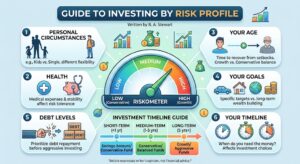
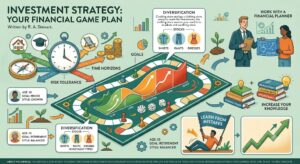
Because investing is not a sure thing in most cases, it is much like a game – you don’t know the outcome until the game has been played and a winner has been declared. Anytime you play almost any type of game, you have a strategy. Investing isn’t any different – you need an investment strategy which is based on factors such as your age, your goals, and your personal circumstances.

An investment strategy is basically a plan for investing your money in various types of investments that will help you meet your financial goals in a specific amount of time. Each type of investment contains individual investments that you must choose from. A clothing store sells clothes – but those clothes consist of shirts, pants, dresses, skirts, undergarments, etc. The stock market is a type of investment, but it contains different types of stocks, which all contain different companies that you can invest in. 

Your financial plan must be one which fits in with your personal circumstances and not something which you feel you should do just because others are doing it. Making choices which will enable you to live within your means is at the heart of money management, it is not the size of your pay packet which counts it is what you do with it which determines how much you have by the following pay day.

If you haven’t done your research, it can quickly become very confusing – simply because there are so many different types of investments and individual investments to choose from. This is where your strategy, combined with your risk tolerance and investment style all come into play. There are plenty of books available on finance and investing. Reading these books will increase your financial literacy with the result that you make better choices in the future.

If you are new to investments, work closely with a financial planner before making any investments. They will help you develop an investment strategy that will not only fall within the bounds of your risk tolerance and your investment style, but will also help you achieve your financial goals. 

Never invest money without having a goal and a strategy for reaching that goal! This is essential. Nobody hands their money over to anyone without knowing what that money is being used for and when they will get it back! If you don’t have a goal, a plan, or a strategy, that is essentially what you are doing! Always start with a goal and a strategy for reaching that goal!

Your goals are the factors which determine where you should invest your money. If the money is for your retirement then growth funds may be the answer to where to invest but this all depends on how long to go before you retire and when you are likely to need that money.

Never beat yourself up for making the odd mistake and never let it deter you from making future investments. Learn from your mistakes and learn from them. In this way you will become a better investor.

ABOUT THIS ARTICLE

This article is for information purposes only and is not financial advice, it is of the opinion of the writer and may not be applicable to your personal circumstances, therefore discretion is advised. 

Read my other articles on www.robertastewart.com

Working in your chosen field

You may not have the talent or inclination to be an international sportsperson but you can be an asset in your chosen field and that does not mean that you have to be something out of the ordinary to become a valued member of society. A person who works at an entry level job can do so with such a good attitude that their diligence will not go unnoticed by their employers.

You may not particularly like your job and have any control over what happens at work but your attitude is something you can control. An employer with a bad attitude will take that bad attitude with them wherever they go. 

If you enjoyed this article then this ebook may interest you:

How to Enjoy Your Job

Investing: Experience is the best teacher

Investing: Experience is the best teacher

Written by R. A. Stewart

“He who never made a mistake never made anything”-Jim Addison, Scottish evangelist

In investing as in anything else in life there is no substitute for experience. It is all very well learning about how to become a good investor but it is only when you start investing your own money in the markets when you learn how to become a good investor.

Some investors play the markets on paper and are excited that their paper portfolio is showing a profit on paper so start investing real money and soon find that the markets don’t just rise but fall as well.

It soon dawns on them that what goes up also goes down. 

It is important to get used to the volatility in the markets and ride out the lows. If you are clear on why you are investing then the highs and lows are not a problem.

There are two ways to learn:

  1. Your own mistakes
  2. The mistakes of others

You can reduce your own mistakes by getting yourself financially literate. This comes from reading books on investing and finance and from learning from the mistakes of others.

There is nothing quite like making your own decisions as to where you are going to invest your money. The satisfaction to be had when your judgment is spot on, but you will make mistakes along the way as we all do.

Don’t beat yourself up if some company you had shares in fell by the wayside. Learn from your mistakes and move on. It is important to not let the market volatility deter you from investing.

If you are new to the world of investing then think of it this way. If you are learning to drive a motor vehicle, learning how to use a computer, or learning the ropes in a new job, you will make mistakes but as you gain more experience your level of competence will grow and your mistakes will be less and less.

Learn all you can about the ins and outs of the market and apply it to your own personal circumstances. The older investors have been through a number of roller coaster rides with the share market over the years and are worth listening to for their opinion, but it pays to have the discernment to know who is worth listening to and who not to take advice from.

A few people were scared from the 1987 share market crash, called “Black Monday” that they never invested in the share market since. Such people have missed out on the gains since 1987 and the experience would have made them good investors.

Good judgement comes from past bad experiences; it is all a result of the lessons taken from previous experiences. 

Investing experience will give you the ability to make better choices in the future and this helps to increase your future wealth. 

Never use the excuse, “I don’t have any experience in this or that”, we all started from somewhere, and today it is possible to start investing in the markets on a shoe-string with all of these investing apps.

All the best

About this article

The information here is the opinion and experience of the writer and is not financial advice, therefore discretion is advised.

Read my other articles on www.robertastewart.com

 Tired of seeing your bank charge you $5-10 every time you withdraw cash abroad PLUS that hidden foreign transaction fee? 🤯 That’s money that should be buying you a gelato, a beer, or a souvenir. Wise gets you the real mid-market exchange rate with only tiny, transparent conversion fees from 0.42%. Stop funding your bank’s next vacation. Fund yours. 

JOIN WISE HERE