

How to Start a Sharemarket portfolio from Scratch…

How to Start a Share market portfolio from Scratch…

Even if you have never invested a dollar

Written by R. A. Stewart

You are a beginner to investing and want to know how to get involved in the share market and don’t have much money to invest.

My advice is firstly to ensure you have set up a pension scheme with your employer. This will help make money retirement easier as far as finances goes. Anything else you invest should be treated as strings to your financial bow.

Here is my advice to investing novices. 

There are two ways for you to drip-feed your money into the share market. They are:

  1. To join a managed fund type of investment. This is a fund where your money is combined with the money of other investors. The fund manager invests in the share market on your behalf. This minimizes risk because funds invested in this way are spread across different asset classes, something which is unobtainable for most investors unless you are already financially well off.
  2. To sign up with an online investing site where you are able to drip-feed money into the share market. Do your research into the various platforms. Popular ones are robinhood in the USA and sharesies in Australasia. 

Two pieces of advice which financial experts will tell you is “Do your research and diversify.”

It helps if you are familiar with the industries and companies you are investing with. I use the online platform “Sharesies” which is based in New Zealand. My strategy is to choose one company per year and drip-feed money throughout the year into this one company. I chose New Zealand based companies, all of them household names. I have already decided the following year’s company to invest in by Christmas.

I have invested in a range of companies such as Genesis Energy, Spark, Fontierra, Fletcher Building, PGG Wrightsons, and Contact Energy. All are well known brands.

It is important not to get too greedy. The internet is full of stories of people who got rich investing in this or that and made a killing. This has to be treated like a grain of salt because for everyone like that, there are countless others who tried the same thing and failed.

Greed often gets the better of people and the one who made the killing will often end up giving it all back.

The share market rewards consistency and persistence. Make sure you are in the right fund for your risk profile and your goals. If you are drip-feeding money into the share market like I am doing then it shouldn’t matter how the markets are performing. Just keep investing and let time be your friend. After all, investing with an online app is just another string to my financial bow.

You should invest in the share market with money that you cannot afford to lose is a piece of advice I have heard time and again. The main question before you invest in something is, “How will the loss of this money affect my lifestyle?” 

I would not recommend that you invest in growth funds if you need the money within a year or two because the markets may drop just as you are about to withdraw the money.

It is important to be sensible and strategic with your investing and just as important to keep a cool head otherwise you may end up with burnt fingers.

About this article

The opinions expressed in this article are of the opinion of the writer and may not be applicable to your personal circumstances, therefore, discretion is advised. You may use this article as content for your blog/website, or ebook.

Read my other articles on www.robertastewart.com

Investing with a Vision

Investing with a Vision

Written by R. A. Stewart

“He who lacks vision will perish.”-Proverbs 29:18

Financial planning requires vision. What does vision mean? It is the art of preparing for the unseen. People will go through life stages. They buy a car, get married, have kids, and retire. A person with vision will make provisions for these life stages. A person with no vision will spend all of their discretionary spending money without giving any thought to the future.

This is irresponsible and selfish because there are consequences to spending now and burying your head in the sand mentality and that is often poverty. 

If you enter into a relationship with someone then you will take your financial situation into that relationship. If you have a bad credit rating then you and your partner may have difficulty obtaining a mortgage.

Someone who is a good money manager will make provisions for the future which will help them to withstand financial shocks which may not have been predicted such as a job lay off or health issues.

Financial planning does not end with saving money, but rather it is the beginning. Investing that money so that it is working for you can increase your savings and certainly your financial literacy. Your risk profile is the factor which determines where you should invest your money.

Your risk profile is the amount of risk you can take on in relation to the term of the investment. 

If you are in your twenties or thirties then investing in growth funds may be right for you because you have more time to recover from a market meltdown. Someone in their sixties may need their retirement funds within five years or less and the last thing you need is for the markets to take a dive just when you need the money.

If you are putting money aside for a mortgage deposit, car, your child’s education, then you may want to take a more balanced approach with your investing.

It is worth pointing out that you could fit into more than one risk profile category.

If you are young then financial advisors suggest that investing in growth funds is the way to go for your retirement fund because you may have more than forty years before you retire.

However, you may also be putting away money for a mortgage deposit and need that money within 5-10 years so taking a more conservative approach to your house deposit funds may be best. Again, if the markets took a dive just when you needed the money then your house deposit funds will be short of where you intended it to be.

Having the right kind of attitude to your money will pay dividends in the long term. Some people scoff at those who are prudent with their money, calling them selfish and money hunger yet go out and purchase lottery tickets in the hope of winning a quick million. If that is not a contradiction in their philosophy then I don’t know what is. Gold Diggers are notorious for this. A man is their only financial plan; they have no interest in gaining any kind of financial knowledge. There is an abundance of it out there. You just need to pay a visit to your local library to find such books. Even your local charity stores will have some of these books in stock. 

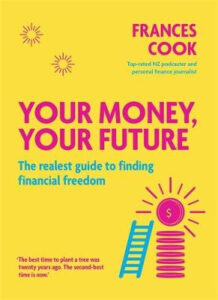
My favourite authors are Frances Cook, Mary Holm, and Martin Hawes. These financial advisors are from New Zealand. Their advice is just as applicable to other countries, well, most of it. It is just a matter of acting on what they say. That is, if it is applicable to your personal circumstances. 

Having some kind of vision for your life will make it meaningful and fulfilling and that requires a degree of vision. Just Go For It and take no notice of your detractors.

About this article

This article is of the opinion of the writer and may not be applicable to your personal circumstances, therefore discretion is advised. You may use this article as content for your ebook, website, or blog.

Read my other articles on www.robertastewart.com

How to respond to financial setbacks


Written by R.A.Stewart

In 2008 during the Global Financial Crisis, a company I had money invested in went bust. I had close to 7 grand invested in it but my initial investment was 5k. The interest rate the company offered investors was higher than what you would receive if investing for a fixed term with the banks. 

I had smaller amounts invested in other companies which went bust.

The company had assets in property and I thought that at least they had assets which could cover the loan if they ever went bust. Problem was, their assets were worth less than their liabilities.

It reminds me of the 1987 sharemarket crash, also known as “Black Monday” when investors borrowed money using the value of their shares as collateral and as the value of shares increased investors were able to borrow even more. 

That is until the crash when the value of their portfolio was worth less than the money owing on them.

A guy I worked with told me that he had mortgaged his house to purchase shares and was left with a debt which at that time will take years to pay off.

There are several ways in which people respond to financial setbacks such as those that have been described. Here are three:

  1. Stop investing in the markets

Some people who got their fingers burnt during Black Monday, stopped investing at all and just left their money in an ordinary savings account. These people may have avoided future share market shocks but they have also missed out on the market rises. Savings which are just left in a personal bank account will lose money if it is left there for any length of time when you consider the effect of inflation and taxation.

  1. Blame Others

During the Global Financial Crisis (GFC), a lot of investors lost money that they had invested in finance companies. A few had their entire life savings invested in some of these companies. Many blamed those in charge of the company for it going under. Not one of those who were interviewed by the TV reporter who covered their meetings took responsibility for their situation or even admitted that they made an error in placing all of their eggs in the one basket. Why did they not diversify their portfolio in order to minimize the risk of losing everything in one hit. Placing all of your eggs in the one basket is just like going to the races and putting all of your money on the one horse. It is easy to be upbeat when things are going well, but try getting along with someone who has taken a heavy loss.

When choosing where to invest, the question one has to ask is, “How will the loss of this money affect my lifestyle?”

Greed gets the better of some people, so much so, that they ignore all of the telltale warning signs. 

Financial experts warned investors about the risks of investing in financial companies which offer high interest rates, saying, “The high interest rates do not reflect the risk investors are taking with their money.”

  1. Learn from the experience

Then you can take it on the chin and accept that you made an error of judgement. Experience is an expensive teacher but you have to invest in order to gain experience and become financially literate. It is important to get over the fear of loss when investing for the long term. If you are investing for the short term such as for next summer’s vacation or for a car then you may want to invest conservatively.

The question that needs to be asked is, “How will the loss of this money affect my lifestyle?”

When I say loss, I mean if the share market drops by 5% or more. You lose only if you sell your shares. A 5% drop in the market is not a problem for those investing for the long or medium term. 

The only way to get experience is to invest. Experience is your best teacher; this applies to any job or activity which you undertake. You will make mistakes; don’t beat yourself up or blame others; learn the lesson and take that into your future decisions.

About this article

This article may not be applicable to your personal circumstances, therefore discretion is advised. You may use this article as content for your blog/website or ebook. 

Read my other articles on www.robertastewart.com

Your Money Your Responsibility 

Your Money Your Responsibility 

Written by R. A. Stewart

Your money is your responsibility. It is your choice what you do with it once it becomes yours, but you have the responsibility of how you manage your money. Being a good steward of money means being responsible for how you use it. This requires maturity.

Here are the main factors which will help you become a good steward of money.

  1. Gaining a financial education

It is your responsibility to become financially literate. In this day and age where there is so much information available on making the most of your money, it is inexcusable to be financially literate. 

All it may take for you to find books on personal finance is to just visit your local library. If you are prepared to spend a bit of money then you may find some good books at your local bookstore.

Frances Cook, Mary Holm, and Martin Hawes are excellent New Zealand authors of Financial books.

  1. Make your own decisions

Some people will get others to make decisions on their behalf, so that whenever something goes wrong they always have someone to blame. “You told me to invest in such and such company and now I have lost my money.” It is your money so that it is your responsibility to make the most of it. 

  1. Accept your own mistakes

Investing is a learning process. In order to become a good investor you need to invest and gain experience doing so. Mistakes will be made. The important thing is to learn from them and move on. 

  1. Living within your means.

It is your responsibility to live within your means. This means that if you choose to get married, have kids, or buy a car, then it is your responsibility to ensure that you are in a suitable financial position to do these things. 

  1. Pay all of your bills

Everyone has fixed costs such as utilities, phones, and whatever. It is the responsibility and the mature thing to pay all of these on time. A bad credit rating can hurt your chances of obtaining a mortgage in the future.

  1. Save a portion of your income

It is your responsibility to save a portion of your income to provide some kind of cushion for a future financial setback. Establishing a rainy day fund is always suggested by financial experts.

  1. Listen to wise advice

The markets went up and down and they were all down after President Trump announced tariffs on overseas imports to the US. The experts in New Zealand were advising investors to remain calm during this time and not to react to the market slide by changing funds. “This is the nature of the markets,” they said. Many did change funds and when the markets recovered the losses, these people missed out on the gains. As a result, their kiwisaver balances took a hit. 

Your financial plan has to take into consideration the market volatility. The question is, “If the market dropped 5% or whatever, how will this affect my lifestyle?”

If you have ten or so years remaining till you retire then the answer is that it won’t in the short or medium term. 

It is your responsibility to heed advice when it is given but at the same time have the common sense to know whether the advice is good or bad.

Once you have gained enough experience at investing you will have the know how to discern whether advice is good or bad and what the motive is behind the person giving the advice.

About this article: The opinions expressed are those of the writer and may not be applicable to your personal circumstances therefore discretion is advised. You may use this article as content for your blog/website or ebook.

Read my other articles at www.robertastewart.com

Kiwisaver Benefits for KIwis

Are you throwing money away?


Written by R. A. Stewart


New Zealand’s kiwisaver scheme is a retirement scheme for New Zealanders. There are many features and benefits of joining kiwisaver.

What is the difference between a feature and a benefit?

A feature of kiwisaver is that the money is locked up until you reach the age of 65.

The benefit is that you will have a nest egg waiting for you when you retire.

Here is the main benefit of kiwisaver. 

The government will deposit $520 into your kiwisaver providing your contribution is at least $1040 during that financial year.

People who are not contributing to kiwisaver or have not even joined are missing out on all of this money.

Why?

It is hard to fathom why anyone would not join kiwisaver. 

There will not be a single person who reaches the age of 65 who regrets that they contributed to kiwisaver all of their lives.

It is a matter of asking the question, “What will my future self thank my present self for”?

The key to kiwisaver is to keep contributing irrespective of what the markets are doing. 

Investors will be rewarded for their consistency.

Some people have prioritized other things such as sky TV, cats and dogs, lotto, smoking, and booze over their future prosperity.

It is all about choice and it is something everyone has. 

Any New Zealander is able to join kiwisaver.

Any one of any age, from the day a baby is born to those already retired. 

It is important to point out that only those aged from 18-65 are eligible for the government money. It is still worthwhile for those age groups which are not eligible for the government top up to join kiwisaver because it will give the young ones a head start in life and who knows, a rich uncle may leave them some money in his will. It doesn’t pay to fall out with your family by making false allegations about your cousin.

The retired folk can treat kiwisaver as an investment; one which you have access to.

There are circumstances when you are able to withdraw money from kiwisaver, they are:

(a) For bond money if applying for a flat to rent, but only under thirty year olds are eligible to apply.

(b) You may use a portion of your kiwisaver as a deposit on your first home. Most people who take this option are in their thirties.

(c) Moving overseas permanently.

(d) Terminal illness

(e) Hardship

There are some hoops to jump through when trying to withdraw your kiwisaver for hardship reasons. 

There are several books on personal finance which I recommend with my favourite New Zealand authors being Frances Cook, Mary Holm, and Martin Hawes. Check them out. Maybe your local library will stock their books.

With so much information on personal finance available there is no excuse for being financially illiterate. Not joining kiwisaver when you have the means to is just stupidity.

If you are one of these people then you are just throwing money away

About this article:

You may use this article as content for your blog, website, or ebook.

Read my other articles on www.robertastewart.com

What Is an Investor’s Risk Profile? (And Why It Matters)

Factors which determine your Risk Profile:

Written by R. A. Stewart

Your risk profile is the amount of risk you are advised to take with your investments. There are many factors which determine your risk profile with the main one being whether the money you are investing is needed in the short term, medium term, or long term. 

Short term is when you need the money within 12 months

Medium Term is when you need the money within 5 years

Long term is when you need the money in more than five years time

Here are the main factors in determining your risk factor:

Factor 1: Your age

Young people have one thing in their favour which the older ones don’t have and that is time. The young ones have more time to recover from financial setbacks such as a share market crash, a job loss, or whatever, therefore are about to invest in growth funds which can be volatile. Older people need to be a little more conservative. New Zealand financial advisor Frances Cook has a formula for working out what percentage of your portfolio should be in shares; it is this: subtract your age from 100. Even if you are in your twenties that does not mean you should be reckless with your money and invest into some kind of risky venture. 

Factor 2:Your health

Your health is a major factor in determining your risk factor. If you have a health condition which requires or may require expensive medical treatment in the future then investing in growth funds may not be your best option because you do not want to lose your money just when you need it. This does not mean that you should not invest anything in growth funds but just not most of it. It may be a good idea to set up a bank account for those medical bills.

Factor 3: Your Personal Circumstances

Your own personal circumstances need to be taken into account. If you are single with no commitments then you will be able to take more risks with your money than someone who is married with children.

Factor 4: Your Debts

Your debts are a big factor in what you should do with your money. There is no point in investing your money at 5% interest when you are paying 15% interest on your loans. People with debts have a responsibility to pay off their own debts and need to prioritise that before turning their attention to investing. 

Factor 5: Your Temperament

Your temperament is a factor. If you are going to lose sleep at the thought of losing your money; something which can happen if you are investing in the share market, then going for more conservative funds is better for you but when it comes to long term investing such as your retirement fund then investing too conservatively will mean that you will likely end up with a lot less money in the kitty when you retire.

About this article

This article is of the opinion of the writer and may not be applicable to your own personal circumstances, therefore discretion is advised.

You may use this article as content for your blog or ebook. Feel free to share this article with others.

www.robertastewart.com

“Dreaming of retirement but worried you haven’t saved enough? Retire With Little Money reveals practical, proven strategies to build a secure future—even on a modest income. Learn how to maximize Social Security, downsize smartly, generate passive income, and stretch your savings further with frugal living hacks. Discover low-risk investments, side hustles for retirees, and government programs that can help. Whether you’re decades away or just a few years from retirement, this guide shows you how to make the most of what you have. Don’t let a small nest egg hold you back—start planning your stress-free retirement today!“*

https://robertalan.gumroad.com/l/sdzvl


Share market falls on the back of Trump Tariffs

Markets tumble

Written by R. A. Stewart

The markets have taken a tumble after President Trump’s tariffs have started a trade war.

The newspapers have reported that Kiwisaver balance will be affected on this. This is stating the obvious. Kiwisaver balances may have dropped, but a lot of people are decades away from retirement so how the markets are performing in 2025 is not going to affect how much they have in kiwisaver when they retire in 2035 and beyond.

It all boils down to selecting the right fund for your risk profile. Money invested falls into one of three categories. Short-term money, medium term money, or long-term money depending on when you are going to be needing that money.

Other factors which come into it are your age, health, and commitments.

The share market goes up and down and the recent (March 2025) tumble is mainly due to the tariffs which President Trump has imposed on goods from certain countries, namely steel. 

Losses are only on paper, but investors who react to recent events and change to conservative funds will lock in those losses and miss out on the gains when the markets rebound. 

The United States will have a new President in four years time, and it certainly will not be Donald Trump in charge then so the markets will certainly bounce back then, if it had not prior to that.

Changing to conservative funds is not the only way to lose during a market slump. The others are to stop contributing to your retirement fund or if you are already retired, make withdrawals from kiwisaver.

With everything being said, it is not the current market slump which will determine how much your retirement portfolio is worth when you retire but how you react to market volatility and that is all down to the choices you make. 

Here is a list of choices which will affect your kiwisaver balance when you retire:

  1. Changing from a growth or balanced fund to a conservative fund.
  2. Stop contributing to your retirement fund.
  3. Withdraw money from your kiwisaver.
  4. Chopping and changing from one type of fund to another.

No one is going to reach the retirement age and regret that they made contributions to their retirement fund. Ask yourself this question, “Will my future self thank me for investing my money instead of wasting it?”

Your retirement fund can only be accessed when you reach the retirement age, therefore you need an alternative source of funds to cover any future financial needs. There are lots of online investing platforms available where you can invest a minimal sum of money regularly and still have easy access to your funds. If you are from New Zealand or Australia, sharesies is a good option for you. This gives you easy access to the share market.  Check out Sharesies Here

About this article

The opinions expressed in this article are of the writer’s own opinion and may not be applicable to your personal circumstances, therefore discretion is advised. 

Disclaimer: I may receive a small commission if you join sharesies.

You may use this article in full or part as content for your blog or ebook. Check out my other articles on www.robertastewart.com

Kiwisaver for kids: what you should know

Kiwisaver for kids: what you should know

Written by R. A. Stewart

Some people may be asking if they should sign their kids up for kiwisaver. My answer to that question is a resounding “Yes” though some people might have a different opinion.

Kiwisaver is New Zealand’s retirement scheme. Anyone who is a New Zealand resident or citizen can join and take full advantage of the incentives the government provides for members of kiwisaver. There is no age restriction. Anyone can join from newborn to those already in retirement. However, the incentives do not kick in until a child reaches the age of 18 and stop at age 65, the retirement age in New Zealand.

An under eighteen year old or over sixty five year old in employment can make contributions toward their kiwisaver through their wages; this could be 2%, 3%, 4%, or 8% of their gross wages but their employer has no obligation to contribute to their kiwisaver, even though some choose to.

There is the option of making voluntary contributions toward kiwisaver and this is something which a lot of people do.

What are the benefits of someone under eighteen signing up for kiwisaver?

There are many and the number one reason is that it will improve a child’s financial literacy. It will help them understand how the markets operate and why their kiwisaver balances go up and down.

Another benefit of kids joining kiwisaver early is that it will give their relatives an opportunity to contribute to their kiwisaver; this means that by the time a child reaches eighteen, they may have  a more than useful kiwisaver balance. 

It is possible to use some of your kiwisaver to purchase your first home but you have to have contributed towards the kiwisaver for at least five years. It is not known if the years prior to a member’s eighteenth birthday count. Generally, most home deposit withdrawals are made by those aged over thirty so it may not be such a big deal.

Those aged under 30 are able to access their kiwisaver for a rental bond. The bond is returned to the kiwisaver account after it is returned by the landlord.

The other ways kiwisaver can be accessed prior to turning 65 is in the case of a terminal illness or going overseas permanently. Many folk have made kiwisaver withdrawals due to hardship and this number has increased during the Global Financial Crisis but it should only be as a last resort.

Investors have to go through a lot of hoops in order to access their retirement savings prior to retiring. The purpose of kiwisaver is to build a nest egg for your retirement and to access it early really defeats the purpose of it.

Some people argue, “You can’t take it all with you,” or “I am young.” This kind of thing will lead to certain outcomes. You will be dead and leave your family with financial issues to deal with or you will be broke. The habit of saving money is a habit which will enable you to get the most out of life and the sooner this habit is formed the better off your kids will be in the long run.

Their future self will thank them for it.

About this article: You may use this article as content for your blog/website or ebook. The information in this article is of the writer’s own opinion and may not be applicable to your own personal circumstances., therefore, discretion is advised.

Check out my other articles on www.robertastewart.com

Which company shall I invest in 2025

Written by R. A. Stewart

Drip feeding money into the share market is made possible for the ordinary man and woman who would not have considered themselves as investors. The advantage is that it increases their financial literacy and their wealth. I have used a strategy for investing; one that works for me; this is it:

Each year I choose one company, a New Zealand one and I drip feed money into this company throughout the year. That way, I will have bought shares at the lower price when they are down as well as when they are up. This is called averaging.

Some folk might be asking, “Isn’t investing in one company putting all of your eggs into the one basket?

That is a fair question!

Investing in Sharesies is just a part of my personal investment strategy. It is basically a string to my financial bow. I certainly would not recommend anyone to invest all of their money in just one company but to at least buy managed funds or as they are called in America, Mutual Funds.

Managed funds allow anyone of any means to diversify their portfolio across a range of industries. This all helps to minimise risk.

As I said earlier, I am using a strategy with Sharesies to drip-feed money into the share market, one company per year. The stocks I have done this with so far are Genesis Energy, Spark, Fonterra, Fletcher Building, and PGG Wrightsons.

For those who are unaware of what these companies do, Genesis is a power company, Spark, is in telecommunications, Fonterra sells dairy products, Fletcher Building is in the construction industry, while PGG Wrightsons is a retailer selling farm and agriculture products.

All of these companies are considered household names in New Zealand.

Fonterra has been the best performing stock this year. They export dairy products to various countries, namely China. PGG Wrightsons is the poorest performer. I would not have normally invested money in a retailer in this day and age of the internet but agriculture is what is known as a recession proof industry. As long as there is a farming industry there will always be a demand for the products that PGG Wrightsons sell.

Fletcher Building has not done as well as I would have liked. They are an iconic New Zealand company.

Spark is a telecommunications company. It was previously called Telecom. They are a sold company. 

Which company for 2025?

I was thinking of going for a bank, however, all of the major banks in New Zealand are Australian owned and I want to invest in New Zealand companies. I could invest in another power company such as Contact Energy, Meridian Energy or Mercury Energy. 

Restaurant Brands is another option, but I am not too keen on investing in the hospitality industry. Having said that, KFC will always be popular. I could invest in a retirement home. Ryman HealthCare are a retirement home company. This industry has problems attracting staff which has hindered it’s progress. Still, the baby boomer generation are getting to that age when they are moving into these places.

About this article: The opinions expressed in this article are of the writer’s own opinion and may not be applicable to your personal circumstances, therefore discretion is advised.


Start investing on a shoestring

Sharesies makes it possible for anyone to get into buying and selling shares. It is an online share market platform where you have the option of purchasing shares in individual companies or in various funds (managed/mutual funds). You can even start with $5. This is a no brainer because it gives investors young and not so young the chance to improve their financial literacy. There is certainly no substitute for experience when it comes to learning and this is applicable to everything else, not just investing.

Join sharesies here: https://sharesies.nz/r/377DFM

Book Review: The Barefoot Investor

Book Review: The Barefoot Investor

Written by R. A. Stewart

A personal finance book which is worth a read is “The Barefoot Investor” by Scott Pape. This book is practical and down to earth. It is written in a way that is easily understood.

Some of the things covered are strategies for using your money  to grow your long-term wealth, having a safety net, and having some splurge money, or as it is often called, “discretionary spending money.”

These three types of money are what he describes as buckets.

Another section of the book explains the mistakes made by home buyers; they are:

1.They are waiting for a crash

  1. They rent but forget to save
  2. They buy a house they cannot afford
  3. They buy an investment property first.
  4. They don’t consider other options.

You cannot plan your life around something which you have no control over, the author says in reference to number one. Various websites publish articles about the crash which is about to hit the housing market. Pape claims this to be clickbait to attract visitors to their websites.

Mistake number two is renting but forgetting to save. Such people live from one payday till the next and have nothing to show for their labours.

Many people who did have the self-discipline to save make the mistake of buying a house they can’t afford, and then to compound their financial struggles, kids come along. Such people are sometimes referred to as “The Squeezed Middle.”

Buying an investment property first with the intention of moving in later on. The advice given in the book is, if you want a family home, to save up and purchase one.

People who have given up the notion of purchasing their own home sometimes lose heart and instead of saving money will instead fritter it away so that they have nothing to show for their labours.

Scott Pape writes in a down to early style which makes the book easy to understand, making finance less intimidating for beginners. 

A feature of the book is that Pape encourages everyone to have a healthy relationship with money which does not mean living in deprivation. 

The book focuses on Australian financial systems and this has to be adapted to your own country’s local context.

If you want to improve your financial literacy you will enjoy reading Barefoot Investor; this book will steer on to the right path toward a more successful future.

Read my other articles on www.robertastewart.com