

What are you Saving For?

What are you Saving For?

Written by R. A. Stewart

The ASB television ad asks the question, “What are you saving for?”

When you know the answer to that question it becomes your goal. It leads to another question, “Where to invest your money until it is needed.”

In the TV ad, a boy was saving up to buy his favourite girl a gift. 

Developing the habit of saving for something specific from a young age is a good habit to get into. It teaches young people to be smart and strategic with their money.

As we get older, the things we are saving money for are in the hundreds, then thousands of dollars. As they say, “The difference between men and boys is the price of their toys.”

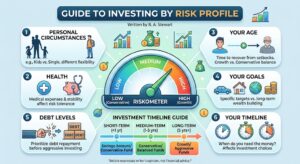
Choosing the appropriate kind of investment for your savings goal is important and the number one factor to consider is your timeline.

If you are saving for something long-term then just leaving your money in an ordinary savings account is not a smart way to save because inflation will erode the value of your money. 

Long-term is 5 years and more.

If you are saving for the medium term then you can be a little more conservative with your investing because you don’t want to invest in something volatile and find that there is a market meltdown just when you need that money.

Medium-term is between 1-5 years.

If you are saving for the short-term then you may need that money within the next twelve months then you can take a no-risk approach and just leave it in an ordinary savings account.

Short-term is up to 12 months.

Here are some long-term, medium-term, and short-term goals which you may be saving for.

Long-term

Retirement fund (Kiwisaver in New Zealand)

Education fund

Home deposit

Medium-term

Saving for a car

Overseas holiday

Marriage and kids

Short-term

Your emergency fund

Money set aside for rates, power, and other household utilities.

Once you have classified which category each fund belongs to it is then a matter of choosing the correct investment for each fund.

In managed funds there are three categories of investment, growth funds, balanced funds, and conservative funds.

Growth funds are suitable for long-term investments because they can be volatile but at the same time have the potential to grow your wealth. Young people have more time on their side to recover from market crashes, therefore, growth funds are appropriate for them, but that does not mean that retired people should not invest in growth funds as long as you are aware of the risks and that a market fall will not affect your lifestyle.

Balanced Funds are suitable for medium-term investing. They are not as volatile as growth funds but you are still exposed to the share-market which means your savings have the potential to grow but not at the same rate as growth funds.

Conservative Funds are less risky. You have a little exposure to the share market but not as much as with balanced and growth funds. Conservative Funds are more suited to short-term investing.

An ordinary savings account is appropriate for money set aside for rates and other house-hold expenses. Making the most of your discretionary spending money and using it for your savings goals can help you achieve them faster. A person who is poor with their money will fritter everything they have and then borrow for things they need.

It is important to avoid becoming fixated with your balances in whichever funds you have chosen. Balances will bounce up and down. That is the nature of the markets. 

There are plenty of opportunities to invest in this day and age with so many online investing platforms available in New Zealand. Sharesies, Hatch, and Kernel Wealth are three which I personally use. If you are from the US then Robinhood is a well-known one over there.

About this article

The views expressed may not be applicable to your personal circumstances, therefore discretion is advised.

You may use this article as content for your blog/website or ebook.

Read my other articles on www.robertastewart.com

Breaking into your Retirement Savings Early can be costly

Breaking into your Retirement Savings Early can be costly

Written by R. A. Stewart

New Zealand’s retirement scheme is called Kiwisaver. There is one thing which makes this scheme unique to retirement schemes of other countries and it is this:

There are circumstances when people can access their money prior to reaching their retirement age, 65 in New Zealand. People can access their money early for any of the following reasons:

  1. Terminal illness
  2. Going overseas permanently
  3. Purchasing their first home.
  4. Hardship.

Numbers 1 and 2 are quite understandable. Number 3 is that if you are purchasing your first home you may be able to use part of your kiwisaver for a house deposit.

Reason number 4 is the most common reason for premature kiwisaver withdrawals. In 2025 58,000 people withdrew money from their kiwisaver for hardship reasons. 

Breaking into your Kiwisaver early is not easy. You have to prove undue hardship, something which 58,000 people have managed to do. 

It is the fund manager’s supervisor who makes the decision to release your funds. They still have to follow a set of strict guidelines and a lot of people will have their application to withdraw early declined as a result.

Some people will see their Kiwisaver balance and think, “You can’t take it all with you, I can do a lot with that money,”

Kiwisaver is earmarked for your retirement or for your first home purchase and should not be touched otherwise you will be paying for it later on down the track.

The whole point of kiwisaver and any other retirement scheme is that you are saving money for your retirement and do not withdraw and keep contributing. 

Consistent long-term savings work well thanks to the magic of compound interest. 

Any break in savings will interfere with this process. 

With compound interest you earn interest on the interest and this helps your savings to grow faster. 

At retirement there can be a big pot of money waiting for you thanks to compound interest which is a friend of the long-term saver.

Making right choices

It is important to make the right choices when making important financial decisions, whether that is entering into a new relationship, purchasing a car, taking out a loan, or making major home improvements. The pros and cons need to be explored thoroughly and not to be rushed into.

All of these major decisions will have consequences, which will eventually lead to an outcome. 

One big mistake is to make major decisions based on today’s circumstances as if today’s circumstances will remain the same forever. Investing some if not all of your discretionary spending money in a share market fund other than kiwisaver will improve your financial know-how. There are several online share-market investing platforms available to begin your investing portfolio if you have not already started one. It is just a matter of being consistent with your investing and letting compounding interest do its work. 

About this article

The contents of this article is of the experience and opinion of the writer and may not be applicable to your personal circumstances, therefore, discretion is advised. You may use this article as content for your blog/website or ebook.

Read my other articles on www.robertastewart.com

Share market slumps

Notable share market falls

Written by R. A. Stewart

The share market has weathered several major storms in the past. While the pandemic was indeed a “Flash Crash” other downturns such as the “Dot-com Bubble” and the “Global Financial Crisis” (GFC) took much  longer for investors to recoup their money. Here are some well-known share-market tumbles since 2000.

Year Crash % fall Recovery Time (to previous peak)

2000: The Dot-Com burst -49% 7 Years

2007: The Global Financial Crisis -56% 5.5 years

2020: The Covid Pandemic -34% 5 months

2022: The 2022 Slump -25% 2 years

The Dot-com slump hit the tech sectors hard. The Nasdaq which is tech-heavy actually took 15 years to recover. The severity of the losses are dependent on which sectors investors had their money in. It is a stark reminder of the value of diversification.

The Global Financial Crisis was referred to as “The Great Recession.” It took steady gains for five years for the market to finally surpass its 2007 level.

The 2020 pandemic was described as the fastest bear market in history. It dropped 34% in just over a month then recovered quickly due to government stimulus and the rapid shift to a digital economy.

The 2022 slump was due to high inflation and high interest rates. This was a “grinding” beat market rather than a sudden crash. It took until early 2024 for the market to reach new all-time highs, largely fueled by the boom in artificial intelligence.

Managing your assets

During these times when the markets are falling, investors find themselves in the “Asset rich, cash poor” trap. They do not want to sell their shares on a falling market in order to cover basic living expenses. This happens when you have all of your wealth tied up in a share portfolio or a retirement fund and little money elsewhere.

It highlights the importance of diversification.

Strategies to weather the next share market tumble:

  1. Keep a buffer fund for emergencies. This is for unexpected expenses which crop up from time to time. It ensures that you are never in a situation where you need to sell shares when they are at the bottom.
  2. Diversify for assets. Not all of your assets will fall at the same time. Some of them such as bonds may hold steady during a share market slide.
  3. Check your investment settings

Changing from growth to balanced, or balanced to conservative funds during a share market tumble will lock in losses and make them permanent, but when you are making new investments, choose where to invest according to your timeline and the purpose for the money.

If you are looking to purchase a car within the next three years, then growth funds are not recommended. Balanced or conservative funds is a better option, but if you want to be safe then a separate personal bank account will do the job.

Share market ups and downs will occur from time to time and every decade has its events which triggered a fall in stock prices, but if you have organised your finances smartly you can weather any storm which any world event throws at you.

About this article

The content of this article is of the opinion of the writer and may not be applicable to your personal circumstances, therefore, discretion is advised.

You may use this article as content for your website/blog, or ebook. Read my other articles on www.robertastewart.com

Asset Rich but Cash Poor


Written by R. A. Stewart

Asset rich but cash poor is when one has substantial non-cash assets but has little money to spend. It is not uncommon for someone to have a home worth several hundred thousand dollars but are struggling to pay their weekly household expenses.

It is not only real estate that can be considered non-cash assets; a retirement account and a business fit into this category because you do not have easy access to wealth which is tied up in these things.

Having an asset which can be easily turned back into cash is important. 

I heard recently that the over 60s considered their home as their biggest asset. This is an age when retirees think about travelling. Personally, I don’t see the point in the elderly spending their money on their house only to just leave the house to someone else when they pass on. 

The elderly have requirements that can turn out to be costly in later life. Therefore, having liquid assets which can be easily turned back into cash is important.

Health issues can strike at any time and without warning, therefore having some kind of financial cushion can soften the blow.

Solutions to being asset rich but Cash poor

  1. Downsizing

Living in a smaller less expensive house can release capital which can then be invested in liquid assets. Diversify your wealth so that there is a balance between non-cash and cash assets. Living a more modest lifestyle will enable one to live more comfortably. 

  1. Equity Release/reverse mortgage

This is when you borrow money using the capital in your home. The money is paid back along with the interest when you die. This option is not suitable for those who want to leave their property to the young ones in their will.

  1. Live within your means

Set a budget and stick with it. Get into the habit of saving and investing. Don’t fritter your money away without any thought for the future.

  1. Invest regularly

Don’t just invest into your retirement fund and leave it at that. Get into the habit of investing some of your discretionary spending money. These days online investing platforms have made it possible to drip-feed money into the share market. It is just a matter of being a consistent saver.

Your Personal Circumstances

Everyone’s financial circumstances are different, therefore any adjustments you make to your asset base must be in alignment with your own goals and financial situation. You may have most of your assets in real estate and still manage to live comfortably. If that is the case then you are doing well.

The thing to consider is that many people like to use their home as part of their retirement fund. By downsizing in retirement, they are able to start travelling abroad.

It is all about living in balance and clearly setting out your priorities. Any decision you make regarding your own asset allocation must be your own and no one else’s. 

Owning assets which can be easily turned back into cash when needed is convenient when the time comes. I remember a retired chap told me that he bought a new car using money he had in his kiwisaver account. This was just prior to when the pandemic of 2020 started. The markets had started to fall after he had bought the car. I told him that no wonder he is smiling because he would have had less money in his kiwisaver if he waited another month to buy that car. This fellow also told me months earlier that his wife had a knee operation costing 30k. I never thought to ask him how he paid for that. 

Health issues will creep up on you and having the means to pay for it all is a problem for a lot of people. Setting up your finances smartly can set you up for the latter part of your life.

About this article

The content of this article is of the opinion of the writer and may not be applicable to your personal circumstances, therefore, discretion is advised.

You may use this article as content for your blog/website, or ebook.

Read my other articles on www.robertastewart.com


Safety First: How to Protect Your Money from Debit Card Fraud

Debit card dangers

Written by R. A. Stewart

How to make the most of your bank’s debit card.

Having a debit card is a handy banking aid to have at your disposal. If you like buying stuff off the internet then you need some form of visa payment system to allow you to do this. Certainly not owning a debit or credit card in this day and age is a bit like not knowing how to use the internet and I have met a few of those people.

There are some rules which need to be followed if you are to make the most of your debit card.

You may not agree with some of what I am saying here but then again there may be something in this article which may be helpful.

Don’t do these things with your debit card:

  1. Don’t have your pay direct debited into your debit card.

If you do this then you are asking for trouble especially if you are buying and selling online because these sites will have your card details and all it would take is for one of these sites to be hacked leaving your card details to be exposed to fraudsters. I use my debit card for online purchases only. I deposit money into my debit card from my personal savings account. 

  1. Don’t use your debit card as a way to save money for your holiday, car, or anything else.

The most obvious reason for this is that your money is not earning any interest. There are better options available for investing your savings such as a personal savings account if the money may be needed within twelve months or an online share market platform such as sharesies or robinhood if you are investing for a longer term.

  1. Don’t leave your debit card lying around where anyone can pick it up.

This is the same as leaving your household keys lying about. If you are just using your debit card to make online purchases only then there is no reason to carry it around with you. Leave it in a safe place at home.

Contact your bank if you notice any deductions on your statement which you never made.

They will then cancel your card and order a new one for you. Take some form of ID with you when you do this.

I knew a lad who had $3,000 missing from his savings account so he contacted his bank. This lad had his debit card linked to his ordinary savings account on one of those overseas websites where you buy stuff. (It was not ebay). What they discovered was that the website was hacked which meant that his account details was exposed. 

In the end, the bank refunded his money. 

I told him that he was better off depositing a lump sum into an account which is not linked to internet banking.

Here are other ways of getting the most out of  your debit card

  1. When using your debit card at the checkout at a retail store choose “cashback” instead of visiting an ATM machine to avoid fees.
  2. Utilize app features to lock your card if it is stolen or lost to temporarily block certain transactions from taking place.
  3. For overseas travel use the wise debit card to minimize high foreign exchange fees which would have otherwise be charged on your bank’s debit card.

About this article

The article is of the opinion of the writer and may not be applicable to your personal circumstances, therefore discretion is advised. 

You may use this article as content for your  blog/website or ebook.

Read my other articles on www.robertastewart.com

The Wise Travel Card

The Wise Debit Card represents a significant step forward in the realm of international banking and financial services. Its commitment to transparency, competitive rates, low fees, and user-friendly features make it a compelling choice for anyone seeking a better way to manage their finances across borders. Whether you’re a frequent traveler, an expatriate, or simply someone looking to save money on international transactions, the Wise Debit Card is worth considering as a reliable and efficient solution.

Get your Wise Card Here

Disclaimer: I may earn a small commission if you sign up for wise.

Invest and Forget

Invest and Forget

Written by R. A. Stewart

I know a couple of people who have money invested in the share market and keep track of how their investments are going by checking up on their shares online just about everyday. I told them that I just invest in such and such and then just forget about them. 

For me, there is no point in worrying about how your share portfolio is going because what the markets are doing is out of my control.

If you have chosen where to invest your money and it is in line with your values, your goals, and your risk profile then what the markets are doing should not be a concern for you.

Financial experts will tell you that if you are investing for the long-term, 10 years plus, you should be a little more aggressive with your investing.

Some investors get panicky when the markets are down and shift funds. Then what happens next is that they miss out on the gains which would regained their previous losses, if you can call it that, because these are just paper losses. They are temporary, but if you decide to sell when your shares are down or switch to conservative funds then these losses are locked in.

Some investors change fund managers because their funds are not doing well. It is worth noting that past record is no guarantee of future performance, so even if a particular fund manager out performed all others this year it does not necessarily mean that they will continue this trend.

If you have chosen which fund type to invest in then how the markets are performing should not be an issue.

Your savings goals can be categorised in one of three goals; they are:

Long-term goals

Medium term goals

Short term goals

Long-term goals are money which is not needed for 5 years+. Retirement savings and house deposit savings are examples of long-term goals.

Medium-term goals are money not needed for 1-5 years. Saving for a car or the trip of a life-time fall into this category.

Short-term goals are money needed within 12 months. This could be your emergency fund set up for unexpected expenses such as an appliance or car breaking down. School expenses, etc.

There is no one shoe which fits everyone, therefore it is up to each individual or couple to set up their own financial plan according to their goals and personal circumstances.

Which funds are best for you?

There are three types of funds to choose from when you invest in a managed fund, also called mutual funds. They are:

Growth funds

Balanced funds

Conservative funds.

Growth funds have the most potential to grow your wealth but are the riskiest. They are for long-term investing. It is suitable for young people because they have more time to recover from a market meltdown.

Balanced funds are a combination of growth and conservative funds. They have the potential to grow your funds but are not as risky as growth funds. 

Conservative funds are safer than growth and balanced funds but are not as profitable. They are more suitable for short and medium-term investing depending on how much risk you are prepared to take on.

Once you have chosen where to invest your money, you should just get on with your life and turn your attention to other things. In other words, “Invest and Forget,” because what happens in the money markets is out of your control.

About this article

This article is of the opinion of the writer and may not be applicable to your personal circumstances, therefore discretion is advised. You may use this article as content for your website/blog or ebook.

Read my other articles on www.robertastewart.com

Investing in Risk and Reward and how it affects you

Written by R. A. Stewart

In life people get involved in what are considered to be dangerous activities. Being a jockey or a racing car driver are such activities but there are protocols in place to mitigate the risks. If a horse slips after a race the jockeys will examine the track in order to ascertain whether it is safe enough to proceed with the race meeting. If they are not satisfied, the meeting is abandoned.

It is called “risk management.”

Investing is similar. Investors will weigh up the pros or cons of a certain investment or their fund manager will do this for them and will then make a decision on whether the company is worth investing in.

Investors need to know the difference between a permanent and a temporary loss.

You can have two investors which have shares in the same company, but they react differently to what is happening in the market. One investor panics after the company’s share price drops so has suffered a permanent loss, the other investor holds on to his shares and when the company’s share price rebounds he has recouped his losses. The second investor suffered a temporary loss.

If you have invested according to your risk-profile then what the market is doing should not be a concern to you.

It is important to keep your emotions in check, otherwise they can end up costing you in the long-term.

When investing you want the right amount of risk and that all depends on when you need the money. You can be more aggressive with your retirement savings if you have at least 10 years to go but if the money is needed within 5 years then you need to be a little more cautious because what you do not need is for the markets to drop just when you need the money.

Time can work for and against you in terms of what you do with your money. If you are young then you have the advantage of time on your side. You can be more aggressive in your choice of where to invest your money because you have more time to recover from financial hits. But you have to be prepared to take calculated risks in order to take advantage of the rising markets.

At the other extreme, being too safe and over cautious is not good because inflation will erode the purchasing power of your savings. Leaving your money in an ordinary savings account may be fine for money you need in the short-term but it is not appropriate for long-term savings.

Investing is a balancing between risk and reward. It is important to stick with your plan despite what the markets are doing because panic selling when the markets are down will turn a temporary loss into a permanent one. This means that those investors who sell their shares during a market downturn will miss out on the gains when the market recovers.

If you want to get involved in any kind of dangerous activity, think about the risk and how it will affect your future lifestyle if it all goes pear-shaped, and most of all how much risk you can tolerate.   Never let a temporary loss become a permanent one.

ABOUT THIS ARTICLE

The contents of this article are of the opinion of the writer and may not be applicable to your personal circumstances therefore discretion is advised. You may use this article as content for your blog/website, or ebook. Read my other articles on www.robertastewart.com 

The Advantages of Saving Money

The Advantages of Saving Money

Written by R. A. Stewart

“It is not how much you receive but rather what you do with it after you receive it.”

The benefits of saving a portion of whatever you receive cannot be understated. We all have a choice in what we do with our money and unless you are being controlled by someone else then your choice of what happens to your money is the major influencer of your long term financial wealth.

It is the choices you make in life which will have a major influence on your financial outcome. That is the choice of entering into a relationship, the choice to purchase a car, and so forth. In many instances there are people who bleat about the cost of living crisis but at the end of the day their situation is often their own making.

It is all about priorities. 

It can be said that stupidity is one reason for poor financial outcomes. I mean how else do you explain why there are people who are subscribed to Netflix and satellite TV, but have not joined Kiwisaver, New Zealand’s retirement scheme.

Saving for something and not just for the sake of it will give your life some purpose.

If you are wondering what to save for, here are several ideas:

  1. Your retirement
  2. An emergency fund
  3. An education fund
  4. Travel
  5. Major Purchases
  6. Your Hobbies
  7. Your Wedding
  8. Home repairs
  9. Start a business

There is a stark difference between saving to build up your wealth and saving to spend. When you are saving to build up your asset base you are increasing your resilience to life’s financial shocks. Saving to spend means that you are back to square one once your money is gone. This is particularly so when it comes to travel. 

Other expenses such as further education can be a good investment but you have to be sure that it is what you really want to do otherwise it will be just a waste of time and money.

Setting up an emergency fund is an excellent way of having money available for unexpected expenses which may crop up from time to time. 

Home repairs may add value to your home but it all depends on your priorities. Retired people may prefer to spend that money on travel.

Here is something to think about:

Having your assets in the share market means that your assets can be quickly turned back into cash when you need it. This is not the case with property which may take months to sell.

Another thing to consider with property is that many of the home improvements may not even increase the valuation of the property which means that it is money which is spent with no return.

Saving and investing money is a good habit to get into, it leads to a more prosperous future. Borrowing money and getting into debt is a bad habit which can lead to a poor financial outcome. Even if you do manage to pay everything by the due date, you have to consider whether you are making the right choices in your choice of lifestyle.

Paying interest on borrowed money over a lifetime is an expensive way to purchase stuff. It is better to save up for things rather than borrow, that way you will pay the retail price of whatever it is you are purchasing.

The bottom line is that living within your means is the key to managing your money successfully and that requires discipline.

Read my other articles on www.robertastewart.com

Exploring the Pros and Cons of Utilizing Expedia for Travel

In today’s digital age, planning a trip has become more accessible than ever before, thanks to a myriad of online travel agencies (OTAs). Expedia stands out as one of the most prominent players in this field, offering a vast array of travel services from flights and hotels to car rentals and vacation packages. While Expedia undoubtedly simplifies the travel booking process, it comes with its own set of advantages and drawbacks that travelers should consider before making their reservations.

Pros:

  • Convenience:  Expedia provides a one-stop platform where travelers can browse and book flights, accommodations, and activities all in one place. This convenience saves time and effort compared to visiting multiple websites or contacting individual service providers separately.
  • Competitive Pricing: Expedia often offers competitive pricing due to its ability to negotiate deals with airlines, hotels, and other travel suppliers. The platform frequently features discounted rates, special promotions, and bundled packages, allowing travelers to find cost-effective options for their trips.
  • User-Friendly Interface: Expedia’s website and mobile app are user-friendly, featuring intuitive navigation and search functionalities. Travelers can easily filter search results based on their preferences, such as price range, location, and amenities, making it simpler to find accommodations and flights that meet their specific needs.
  • Reviews and Ratings: Expedia aggregates reviews and ratings from verified travelers, providing valuable insights into the quality and reliability of accommodations, airlines, and activities. These reviews help users make informed decisions and choose options that align with their expectations.
  • Customer Support: Expedia offers customer support services to assist travelers with booking inquiries, itinerary changes, and other issues that may arise before, during, or after their trip. This support can be accessed through various channels, including phone, email, and live chat, providing peace of mind to travelers facing unforeseen circumstances.
  • Check out some great travel bargains here

Cons:

  • Hidden Fees and Restrictions: While Expedia advertises competitive prices, travelers may encounter hidden fees, such as booking fees, resort fees, or additional charges for amenities. Moreover, some bookings may come with restrictive terms and conditions, such as non-refundable rates or strict cancellation policies, which can lead to unexpected expenses or inconvenience.
  • Limited Customization: Despite offering a wide range of options, Expedia’s customization capabilities may be limited compared to booking directly with airlines or hotels. Travelers with specific preferences or requirements may find it challenging to tailor their bookings precisely to their needs, potentially compromising their overall travel experience.
  • Dependency on Technology: Relying solely on Expedia for travel bookings introduces a level of dependency on technology. In the event of technical glitches, server outages, or connectivity issues, travelers may encounter difficulties accessing their reservations, making changes, or obtaining assistance, which can be particularly stressful when traveling.
  • Lack of Personalized Service: While Expedia provides convenient self-service options, it may lack the personalized touch offered by traditional travel agencies or direct bookings. Travelers seeking expert advice, customized itineraries, or personalized recommendations may feel underserved by Expedia’s automated platform.
  • Potential for Overbooking or Errors: Like any online booking platform, Expedia is susceptible to errors, including overbooking, incorrect listings, or discrepancies between what is advertised and what is actually available. Travelers may encounter frustration or inconvenience if they arrive at their destination only to discover discrepancies between their expectations and the actual accommodations or services provided.
  • Check out some great travel bargains here

In conclusion, Expedia offers a convenient and cost-effective solution for travelers looking to book flights, accommodations, and activities online. However, it’s essential for travelers to weigh the pros and cons carefully and consider their individual preferences, priorities, and travel requirements before relying solely on Expedia for their trip planning needs. By understanding the advantages and limitations of using Expedia, travelers can make informed decisions to ensure a smooth and enjoyable travel experience.

Discover more about Expedia in the link below:

Check out some great travel bargains here


Sign up for Expedia here

Mastering Your Money: How to Set and Achieve Financial Goals

In order to get to where you want to go you have to know where you are going and this involves goal setting. Even if you do not set goals you will still end up someplace. Even those who ended up in the poor house started their journey someplace. Choosing where you want to go involves goal setting otherwise your destination will be chosen for you.

Setting financial goals 

Getting all of your finances in order takes a bit of give and take as far as deciding what you have to give up in order to achieve something else. If all our dreams came true we could buy anything we want when we want it but we do not live in our ideal world so we need to decide on what our priorities are.

In today’s world where getting one’s foot on the property ladder is unachievable for a lot of young people under their current circumstances that they need to find another strategy. They same rules apply whatever the circumstances and that is getting into the savings habit and investing money is important. If you are a New Zealander then I cannot stress enough how important it is to join the NZ retirement scheme kiwisaver. With all of it’s incentives such as the free government money and employer contributions this is a no brainer. Plus you will be able to use part of your kiwisaver for a deposit on your first home providing you have been with kiwisaver for five years.

If you are from another country then your retirement scheme will have different rules and schemes.

A multitude of factors will determine your financial goals but the main ones are:

YOUR AGE

If you are young then you have the luxury of time on your side and make time work for you. As the saying goes, “It is time and not timing which is the key to making money in the markets.” 

YOUR FINANCIAL SITUATION

If you are in debt then your number one priority needs to be getting out of debt especially if it is consumer debt. That is debt on stuff that you don’t need such as a TV set, lounge, videos, and other appliances. “If you don’t have the money to buy such items you don’t buy it,” is a good philosophy to have.

The money that is spent on luxury non essential items can be better directed to building your wealth. 

YOUR MARITAL STATUS

This is an obvious one but your marital status is a major factor in determining what your life goals are going to be because life is not all about you because there is another person in the picture; this means that you both have to be on the same page.

So how can I achieve my goals with x amount of money in my pay packet?

1 Increase your income

2 Reduce spending

3 Sell stuff you no longer need

INVEST YOUR MONEY

Invest your money, don’t just fritter it away like most people. An increase in your wages and salary should be invested unless of course you are living from paycheck to paycheck. Set savings goals with long term, medium term, and short term savings goals depending on what you are saving for. 

The time frame for when you require the money is a factor in determining where you are going to invest the money. You certainly would not invest in growth high risk high return stocks if you needed the money in the short term.

www.robertastewart.com

ABOUT THIS ARTICLE

In order to get your life and finances in order it is advisable to set goals. It is easier to set bite sized goals rather than set one big goal. It is easier for a marathon runner to set a goal of one mile repeated twenty six times rather than a goal to run twenty six miles.

Robert Stewart has his own website with articles on  mainly financial/money management on www.robertastewart.com

You may use this article as content for your blog/website, or ebook.