

Breaking into your Retirement Savings Early can be costly

Breaking into your Retirement Savings Early can be costly

Written by R. A. Stewart

New Zealand’s retirement scheme is called Kiwisaver. There is one thing which makes this scheme unique to retirement schemes of other countries and it is this:

There are circumstances when people can access their money prior to reaching their retirement age, 65 in New Zealand. People can access their money early for any of the following reasons:

  1. Terminal illness
  2. Going overseas permanently
  3. Purchasing their first home.
  4. Hardship.

Numbers 1 and 2 are quite understandable. Number 3 is that if you are purchasing your first home you may be able to use part of your kiwisaver for a house deposit.

Reason number 4 is the most common reason for premature kiwisaver withdrawals. In 2025 58,000 people withdrew money from their kiwisaver for hardship reasons. 

Breaking into your Kiwisaver early is not easy. You have to prove undue hardship, something which 58,000 people have managed to do. 

It is the fund manager’s supervisor who makes the decision to release your funds. They still have to follow a set of strict guidelines and a lot of people will have their application to withdraw early declined as a result.

Some people will see their Kiwisaver balance and think, “You can’t take it all with you, I can do a lot with that money,”

Kiwisaver is earmarked for your retirement or for your first home purchase and should not be touched otherwise you will be paying for it later on down the track.

The whole point of kiwisaver and any other retirement scheme is that you are saving money for your retirement and do not withdraw and keep contributing. 

Consistent long-term savings work well thanks to the magic of compound interest. 

Any break in savings will interfere with this process. 

With compound interest you earn interest on the interest and this helps your savings to grow faster. 

At retirement there can be a big pot of money waiting for you thanks to compound interest which is a friend of the long-term saver.

Making right choices

It is important to make the right choices when making important financial decisions, whether that is entering into a new relationship, purchasing a car, taking out a loan, or making major home improvements. The pros and cons need to be explored thoroughly and not to be rushed into.

All of these major decisions will have consequences, which will eventually lead to an outcome. 

One big mistake is to make major decisions based on today’s circumstances as if today’s circumstances will remain the same forever. Investing some if not all of your discretionary spending money in a share market fund other than kiwisaver will improve your financial know-how. There are several online share-market investing platforms available to begin your investing portfolio if you have not already started one. It is just a matter of being consistent with your investing and letting compounding interest do its work. 

About this article

The contents of this article is of the experience and opinion of the writer and may not be applicable to your personal circumstances, therefore, discretion is advised. You may use this article as content for your blog/website or ebook.

Read my other articles on www.robertastewart.com

Staying calm during volatile market movements

Staying calm during volatile market movements

The markets do not react to war or other economic events very well and it does not matter that New Zealand or other countries which have nothing to do with the war are far away from the centre of the event. Whether it be the conflict between the USA and Iran, inflation, or economic events in the US.

Investors have their own thoughts on the markets with many saying “Now is not the time to invest.” 

Those with little experience at investing may find the market volatility a bit on the scary side, but the markets have been through this previously and each time came out of the dark tunnel out of the other side.

There have been about 20 wars in the past century which have affected the markets, most notably was World War 11. Most of these markets recovered within 12 months of the war ending. 

It may be so that the markets are down as a result of this war but really it is more due to the blockage of the channel which has caused the oil and gas supply shortage which is the main culprit of this market downturn.

This is likely to hit Trump hard in the pocket if it continues and the President will be as concerned about his portfolio as no doubt other investors are. He is looking for a way to end this conflict. This may be outside of your control, but your portfolio and how you respond to current affairs is something you can control.

Whatever is happening in the world and however the markets are responding is not a reason to react and allow emotion to rule your investment strategy. If you have planned your financial strategy then  you should have taken into consideration the volatility which occurs in the markets. 

If you are too cautious you will miss opportunities which are available.

Those who are contributing to their retirement fund should continue to drip feed money into the markets.

Those who have a lot of their wealth tied up in shares should sit tight because it is not a time to sell. On the contrary, those who are in a position to do so can take advantage of the lull in the share market by purchasing shares at a lower price.

If you have a lump sum to invest then an idea is to just invest a portion of it in the markets every week in order to take advantage of the lows in the markets. This is called dollar-cost averaging.

I use this strategy when investing in sharesies. I choose one New Zealand company to invest in per year and drip-feed money into this company throughout the year. This year it is Meridian Energy.

This is a strategy I have used for buying Bitcoin. That way I have bought some cryptocurrency when the price is both up and down.

Those who are fully invested should hang in there because it is not the time to sell. Your investment decisions should be made with your time frame in mind. That is whether the fund is for the long-term, medium-term, or short-term. If you need the money in the short-term then you should not be investing in something volatile, otherwise you may find that your fund has fallen in value when it comes to using that money.

About this article

The information in this article is of the experience of the writer and may not be applicable to your personal circumstances, therefore discretion is advised. You may use this article as content for your blog/website or ebook. 

Read my other articles on www.robertastewart.com

Saving money on fuel isn’t about one major change; it’s about the “aggregation of marginal gains.” By combining better maintenance with smoother driving and smarter shopping, the average driver can save hundreds of dollars a year.

Get this Guide on How to Save on Fuel

Share market slumps

Notable share market falls

Written by R. A. Stewart

The share market has weathered several major storms in the past. While the pandemic was indeed a “Flash Crash” other downturns such as the “Dot-com Bubble” and the “Global Financial Crisis” (GFC) took much  longer for investors to recoup their money. Here are some well-known share-market tumbles since 2000.

Year Crash % fall Recovery Time (to previous peak)

2000: The Dot-Com burst -49% 7 Years

2007: The Global Financial Crisis -56% 5.5 years

2020: The Covid Pandemic -34% 5 months

2022: The 2022 Slump -25% 2 years

The Dot-com slump hit the tech sectors hard. The Nasdaq which is tech-heavy actually took 15 years to recover. The severity of the losses are dependent on which sectors investors had their money in. It is a stark reminder of the value of diversification.

The Global Financial Crisis was referred to as “The Great Recession.” It took steady gains for five years for the market to finally surpass its 2007 level.

The 2020 pandemic was described as the fastest bear market in history. It dropped 34% in just over a month then recovered quickly due to government stimulus and the rapid shift to a digital economy.

The 2022 slump was due to high inflation and high interest rates. This was a “grinding” beat market rather than a sudden crash. It took until early 2024 for the market to reach new all-time highs, largely fueled by the boom in artificial intelligence.

Managing your assets

During these times when the markets are falling, investors find themselves in the “Asset rich, cash poor” trap. They do not want to sell their shares on a falling market in order to cover basic living expenses. This happens when you have all of your wealth tied up in a share portfolio or a retirement fund and little money elsewhere.

It highlights the importance of diversification.

Strategies to weather the next share market tumble:

  1. Keep a buffer fund for emergencies. This is for unexpected expenses which crop up from time to time. It ensures that you are never in a situation where you need to sell shares when they are at the bottom.
  2. Diversify for assets. Not all of your assets will fall at the same time. Some of them such as bonds may hold steady during a share market slide.
  3. Check your investment settings

Changing from growth to balanced, or balanced to conservative funds during a share market tumble will lock in losses and make them permanent, but when you are making new investments, choose where to invest according to your timeline and the purpose for the money.

If you are looking to purchase a car within the next three years, then growth funds are not recommended. Balanced or conservative funds is a better option, but if you want to be safe then a separate personal bank account will do the job.

Share market ups and downs will occur from time to time and every decade has its events which triggered a fall in stock prices, but if you have organised your finances smartly you can weather any storm which any world event throws at you.

About this article

The content of this article is of the opinion of the writer and may not be applicable to your personal circumstances, therefore, discretion is advised.

You may use this article as content for your website/blog, or ebook. Read my other articles on www.robertastewart.com

Asset Rich but Cash Poor


Written by R. A. Stewart

Asset rich but cash poor is when one has substantial non-cash assets but has little money to spend. It is not uncommon for someone to have a home worth several hundred thousand dollars but are struggling to pay their weekly household expenses.

It is not only real estate that can be considered non-cash assets; a retirement account and a business fit into this category because you do not have easy access to wealth which is tied up in these things.

Having an asset which can be easily turned back into cash is important. 

I heard recently that the over 60s considered their home as their biggest asset. This is an age when retirees think about travelling. Personally, I don’t see the point in the elderly spending their money on their house only to just leave the house to someone else when they pass on. 

The elderly have requirements that can turn out to be costly in later life. Therefore, having liquid assets which can be easily turned back into cash is important.

Health issues can strike at any time and without warning, therefore having some kind of financial cushion can soften the blow.

Solutions to being asset rich but Cash poor

  1. Downsizing

Living in a smaller less expensive house can release capital which can then be invested in liquid assets. Diversify your wealth so that there is a balance between non-cash and cash assets. Living a more modest lifestyle will enable one to live more comfortably. 

  1. Equity Release/reverse mortgage

This is when you borrow money using the capital in your home. The money is paid back along with the interest when you die. This option is not suitable for those who want to leave their property to the young ones in their will.

  1. Live within your means

Set a budget and stick with it. Get into the habit of saving and investing. Don’t fritter your money away without any thought for the future.

  1. Invest regularly

Don’t just invest into your retirement fund and leave it at that. Get into the habit of investing some of your discretionary spending money. These days online investing platforms have made it possible to drip-feed money into the share market. It is just a matter of being a consistent saver.

Your Personal Circumstances

Everyone’s financial circumstances are different, therefore any adjustments you make to your asset base must be in alignment with your own goals and financial situation. You may have most of your assets in real estate and still manage to live comfortably. If that is the case then you are doing well.

The thing to consider is that many people like to use their home as part of their retirement fund. By downsizing in retirement, they are able to start travelling abroad.

It is all about living in balance and clearly setting out your priorities. Any decision you make regarding your own asset allocation must be your own and no one else’s. 

Owning assets which can be easily turned back into cash when needed is convenient when the time comes. I remember a retired chap told me that he bought a new car using money he had in his kiwisaver account. This was just prior to when the pandemic of 2020 started. The markets had started to fall after he had bought the car. I told him that no wonder he is smiling because he would have had less money in his kiwisaver if he waited another month to buy that car. This fellow also told me months earlier that his wife had a knee operation costing 30k. I never thought to ask him how he paid for that. 

Health issues will creep up on you and having the means to pay for it all is a problem for a lot of people. Setting up your finances smartly can set you up for the latter part of your life.

About this article

The content of this article is of the opinion of the writer and may not be applicable to your personal circumstances, therefore, discretion is advised.

You may use this article as content for your blog/website, or ebook.

Read my other articles on www.robertastewart.com


Investing in New Listings

Investing in New Listings

Written by R. A. Stewart

Is it worthwhile buying shares in New Listings, also known as Initial Public Offerings?

I have read that these have the potential for significant early gains, but they can at the same time be risky. 

Pros

There can be benefits in investing in new listings.  They are:

  1. High growth potential if the company performs well in the early stages
  2. You get the chance to invest at the offering price before the company lists on the stock exchange.
  3. The IPO process has stringent rules meaning there is increased scrutiny on the company prior to listing.
  4. Newly listed companies are often hyped up meaning that the share price rises sharply soon after listing.

Cons

There are some downfalls of investing in these new public offerings. They are:

  1. There is limited data to use for making a future prediction.
  2. Shares can be highly volatile if the market is down or the company fails to meet its expectations.
  3. If the New listing is oversubscribed you may receive fewer shares than you requested.
  4. The new listing can be overhyped by its promoters that the price per share is set too high leading to a drop in the share price once the trading starts.

Things to consider

  1. Read the prospectus and do your research online to make sure you understand the risks involved.
  2. Company insiders may not be able to sell their shares for a set period of time and when this set period ends there may be a considerable drop in the share price.
  3. Access to new listings may not be available unless you have a brokerage account, however, they may be available through online platforms such as sharesies and robinhood which allow you to purchase shares with a minimum of investment.
  4. If you don’t have the time to research individual IPOs then maybe you can invest in an Exchange Traded Fund  (ETF). This way you are able to invest in a range of IPOs without trying to pick a single IPO.
  5. Monitor the stock after purchasing it to see how it is going. There are some influencing factors which determine the directions of the stock. This can be initial public demand and hype, market sentiment, and economic trends.
  6. My view is that Initial Public Offerings are not for long-term investing but something which can be part of your portfolio as an added interest. The same rules apply to initial public offerings as they do with any other company you are investing in. The questions you should be asking is:
  7. How does this fit into my financial strategy?
  8. Can I afford to lose this money?
  9. How have similar companies fared in the past?

In a nutshell you should do your own due diligence because you are the one who has to live with any financial decision made concerning your money.

About this article: The contents of this article are of the opinion of the writer and may not be applicable to your personal circumstances, therefore discretion is advised. You may use this article as content for your blog/website or ebook.

Read my other articles on www.robertastewart.com

Invest and Forget

Invest and Forget

Written by R. A. Stewart

I know a couple of people who have money invested in the share market and keep track of how their investments are going by checking up on their shares online just about everyday. I told them that I just invest in such and such and then just forget about them. 

For me, there is no point in worrying about how your share portfolio is going because what the markets are doing is out of my control.

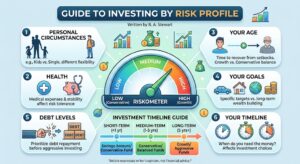
If you have chosen where to invest your money and it is in line with your values, your goals, and your risk profile then what the markets are doing should not be a concern for you.

Financial experts will tell you that if you are investing for the long-term, 10 years plus, you should be a little more aggressive with your investing.

Some investors get panicky when the markets are down and shift funds. Then what happens next is that they miss out on the gains which would regained their previous losses, if you can call it that, because these are just paper losses. They are temporary, but if you decide to sell when your shares are down or switch to conservative funds then these losses are locked in.

Some investors change fund managers because their funds are not doing well. It is worth noting that past record is no guarantee of future performance, so even if a particular fund manager out performed all others this year it does not necessarily mean that they will continue this trend.

If you have chosen which fund type to invest in then how the markets are performing should not be an issue.

Your savings goals can be categorised in one of three goals; they are:

Long-term goals

Medium term goals

Short term goals

Long-term goals are money which is not needed for 5 years+. Retirement savings and house deposit savings are examples of long-term goals.

Medium-term goals are money not needed for 1-5 years. Saving for a car or the trip of a life-time fall into this category.

Short-term goals are money needed within 12 months. This could be your emergency fund set up for unexpected expenses such as an appliance or car breaking down. School expenses, etc.

There is no one shoe which fits everyone, therefore it is up to each individual or couple to set up their own financial plan according to their goals and personal circumstances.

Which funds are best for you?

There are three types of funds to choose from when you invest in a managed fund, also called mutual funds. They are:

Growth funds

Balanced funds

Conservative funds.

Growth funds have the most potential to grow your wealth but are the riskiest. They are for long-term investing. It is suitable for young people because they have more time to recover from a market meltdown.

Balanced funds are a combination of growth and conservative funds. They have the potential to grow your funds but are not as risky as growth funds. 

Conservative funds are safer than growth and balanced funds but are not as profitable. They are more suitable for short and medium-term investing depending on how much risk you are prepared to take on.

Once you have chosen where to invest your money, you should just get on with your life and turn your attention to other things. In other words, “Invest and Forget,” because what happens in the money markets is out of your control.

About this article

This article is of the opinion of the writer and may not be applicable to your personal circumstances, therefore discretion is advised. You may use this article as content for your website/blog or ebook.

Read my other articles on www.robertastewart.com

Investing in Risk and Reward and how it affects you

Written by R. A. Stewart

In life people get involved in what are considered to be dangerous activities. Being a jockey or a racing car driver are such activities but there are protocols in place to mitigate the risks. If a horse slips after a race the jockeys will examine the track in order to ascertain whether it is safe enough to proceed with the race meeting. If they are not satisfied, the meeting is abandoned.

It is called “risk management.”

Investing is similar. Investors will weigh up the pros or cons of a certain investment or their fund manager will do this for them and will then make a decision on whether the company is worth investing in.

Investors need to know the difference between a permanent and a temporary loss.

You can have two investors which have shares in the same company, but they react differently to what is happening in the market. One investor panics after the company’s share price drops so has suffered a permanent loss, the other investor holds on to his shares and when the company’s share price rebounds he has recouped his losses. The second investor suffered a temporary loss.

If you have invested according to your risk-profile then what the market is doing should not be a concern to you.

It is important to keep your emotions in check, otherwise they can end up costing you in the long-term.

When investing you want the right amount of risk and that all depends on when you need the money. You can be more aggressive with your retirement savings if you have at least 10 years to go but if the money is needed within 5 years then you need to be a little more cautious because what you do not need is for the markets to drop just when you need the money.

Time can work for and against you in terms of what you do with your money. If you are young then you have the advantage of time on your side. You can be more aggressive in your choice of where to invest your money because you have more time to recover from financial hits. But you have to be prepared to take calculated risks in order to take advantage of the rising markets.

At the other extreme, being too safe and over cautious is not good because inflation will erode the purchasing power of your savings. Leaving your money in an ordinary savings account may be fine for money you need in the short-term but it is not appropriate for long-term savings.

Investing is a balancing between risk and reward. It is important to stick with your plan despite what the markets are doing because panic selling when the markets are down will turn a temporary loss into a permanent one. This means that those investors who sell their shares during a market downturn will miss out on the gains when the market recovers.

If you want to get involved in any kind of dangerous activity, think about the risk and how it will affect your future lifestyle if it all goes pear-shaped, and most of all how much risk you can tolerate.   Never let a temporary loss become a permanent one.

ABOUT THIS ARTICLE

The contents of this article are of the opinion of the writer and may not be applicable to your personal circumstances therefore discretion is advised. You may use this article as content for your blog/website, or ebook. Read my other articles on www.robertastewart.com 

4 Keys to Financial Success


There are rules to getting the most out of your money and these rules apply to everybody irrespective of your personal circumstances, stage of life, or goals. They are basic common sense.

  1. Live within your means

This is the most basic money management rule. If you do not follow this rule then you are going to struggle to get ahead financially. There are several reasons why people do not live within their means. The main ones are:

(a) Their income does not match their lifestyle

Some people have a lifestyle which is not compatible with their income level and so they overspend or they spend everything they earn with the result that there is nothing to show for their labours. The easy solution is to be more modest in your lifestyle choice. Cutting out things which do not add any kind of value to your life.

(b) Easy access to credit

Easy access for credit has enabled people to bury their heads in the sand rather than confront their financial issues. After all, if you want something then just put it on the plastic. There is a cost to all of this credit and it is called “Interest.”

(c) Lack of self control

Lack of self control is the main factor why people do not live within their means. Being able to say “No” to things you want will stand you in good stead. 

  1. Save

The habit of saving is a habit which will open doors for you as far as being able to afford things. It means that you do not have to borrow money for basic household appliances or a motor vehicle if one is needed. The money saved by not paying interest on these things add up to a fortune during one’s lifetime.

  1. Invest

Investing your money will enable your wealth to grow. Today, there are so many opportunities for those of modest means to invest with so many online investing platforms available. Sharesies and Hatch are excellent online platforms where investors can drip feed money into the share market. Most people in New Zealand have money invested in Kiwisaver. This is New Zealand’s retirement scheme. The annual tax credit and the employer contributions make this the best way of saving for your retirement. Even if these incentives were not available, Kiwisaver would still be a brilliant scheme even without the government money and employer contributions, because funds are locked up until you reach the retirement age of 65.

  1. Make right choices

It is important to make the right choices in order to live a more prosperous life. If you are on the minimum wage then your options are limited as far as what you can afford and the choice to get married, have kids, or buy a car is among those choices which cannot be taken lightly. It is all about making choices which align with your income level and your goals.

I am not saying that you should not get involved with someone if you are on a low income, but rather make sure that you are in a good financial position before you make major life decisions.

About this article

The information in this article is of the opinion of the writer and may not be applicable to your personal circumstances, therefore discretion is advised. You may use this article as content for your blog/website or ebook.

Read my other articles on www.robertastewart.com

How to get the most out of your Kiwisaver this year

How to get the most out of your Kiwisaver this year

Are you getting the most out of your Kiwisaver? 

Here are the main ways of making the most out of your Kiwisaver. If you live in a country outside of New Zealand then some of these points may not be applicable to you.

  1. Claim your full tax credits

The government will pay you $260 every July as an incentive for contributing to Kiwisaver, but to claim this amount you must deposit at least $1,040 every year. This needs to be the goal for everyone who is in Kiwisaver.

Women have breaks in their employment to have kids and often miss out on the government tax-credits. It makes sense for husbands to make voluntary deposits into their wife’s Kiwisaver to ensure that she makes the minimum deposit of $1,040 in order to qualify for the $260 annual tax credit.

  1. Choose the right fund

Choosing the right fund can help your savings grow and grow in the long term. If you are too conservative then you are going to leave yourself short-changed by the time you retire. Retirement savings are considered a long-term investment if you have at least ten years before you retire, however, if you intend to continue working after you reach the age of 65, then you may wish to stick with growth/balanced funds. It all boils down to the risk you are willing to accept and whether a market downturn is going to affect your lifestyle.

You may have your kiwisaver invested in growth funds, but that does not mean that other investments should also be in growth funds. It all depends on your timeline and when you may need the money. If you need the money within five years then it may pay to take a more cautious approach and invest conservatively.

  1. Invest what you can

If you are not employed or are self-employed and can afford to make voluntary contributions into your Kiwisaver then do so by all means. Your future self will thank you for it. Think of what you spend your money on which does not provide you with any value. This could be diverted into your retirement fund instead. 

  1. Check what your contributing

Employers have the option of paying in 3% up to 10% of their gross wages into their Kiwisaver. If you have not nominated how much then you’re probably putting in the minimum amount of 3%. 

  1. Start young

If you have children then it is important that you teach them good financial habits. That is saving for the future. As far as Kiwisaver goes, the age of qualification for the Kiwisaver tax credits has been lowered to 16. This will give youngsters extra motivation to join. 

Saving for your future needs takes vision and is the responsible thing to do and with Kiwisaver you have a scheme which will take care of your needs in later life, providing that you keep contributing during your working life.

About this article

This article is of the opinion of the writer and may not be applicable to your personal circumstances, therefore discretion is advised. You may use this article as content for your blog/website or ebook.

Read my other articles on www.robertastewart.com

Finding Your Calling: Why Specificity and Passion Drive Personal Goals

Setting personal goals

Setting goals do not have to involve money on it’s own. If you set goals based on money then your life is out of balance. It is important to decide what is important to you and is the vehicle to helping you to achieve those aims. In short, money should not be your number one aim. 

If you accept a job with a higher pay then you had better weight up everything that the job involves such as the hours of work, the commute to the job, and responsibilities that come with the job and then decide whether it is worth all of the hassle.

It all depends on your personal circumstances and preferences. There is no size that fits everyone when it comes to goal setting. There is no such thing as “should” even though there are people who think others should do this or do that.

Personal goals are something which are personal to you. Here are some examples of personal goals:

Learning to swim

Learning a new language (specify)

Learning to drive

Learning to use the coffee machine

Learning to salsa dance

Reading the Bible from cover to cover

Meeting your favourite sports player

joining a sports club (specify)

The most important factor in determining your personal goals is your passions. The other factor is your talents. These two are often linked. Whatever most interests you is often where your talents lie but that does not mean that you cannot learn anything new. Most skills and talents are transferable. 

We often see international sports people using the skills which enabled them to reach the elite level in their chosen sport to help them succeed in their chosen career after they have retired. Many have prepared themselves for life after sport by studying to gain a degree during their playing days.

It pays to have a number of strings to your bow as a backup. 

You have to specify what your goal is otherwise it just becomes a wish and anyone can make a wish but it is taking action which will turn a dream into reality.

If you went to your travel agent and asked for a plane ticket they are unable to help you unless you were specific and told them your proposed destination.

Examples of vague goals which are non specific are:

To lose weight

To get fit

To be happy

To save money

The problem with vague goals is that there is no way of knowing when you have achieved your goal. Goals need to be specific and timed. A goal of “To deposit at least a grand into my retirement fund by June 30th, 2023 is a specific and timed goal. You have either achieved your goal or not.

A get fit goal may be “To be able to run a 5k fun run by 31 December 2023.” This is another example of a specific goal which has been timed.

Giving your goals a timeline will give you more motivation. Just telling yourself that one day or some day I will do such and such is not a goal; it is a wish and there is a big difference between wishing for something and being serious about achieving it.

Life needs to be in balance and it is important to consider your personal talents and preferences. Many people have achieved extraordinary success in their chosen field and despite not setting out to make money have accumulated a great sum of money doing something they enjoyed. 

The key here is to not make money your number one goal in life but rather discover your calling. No one else can discover that for you so come out of your shell and broaden your horizons. Who knows, you may just discover your life’s calling in doing so.

Having money behind you will help you to achieve your goals. Sharesies is an online share market platform which can help your savings grow and at the same time develop your financial literacy.

The Wise Travel Card serves as a secure and cost-effective companion for international adventures, designed to help travelers manage funds efficiently. A standout benefit is the ability to hold multiple currencies on a single card, allowing for effortless spending on local essentials such as accommodation, fuel, and snacks.

The card automatically converts money at the mid-market exchange rate, protecting users from the excessive fees and hidden markups typically charged by traditional banks. Through the Wise mobile app, travelers can instantly top up funds, track their balance, and manage their accounts on the go. For enhanced security, the card can be frozen instantly via the app if it is misplaced or lost.

Next Step: You may want to review the specific fee structure on the Wise website or app to see how much you could save on your next trip.

Travel with Wise

www.robertastewart.com